Category: Athletics

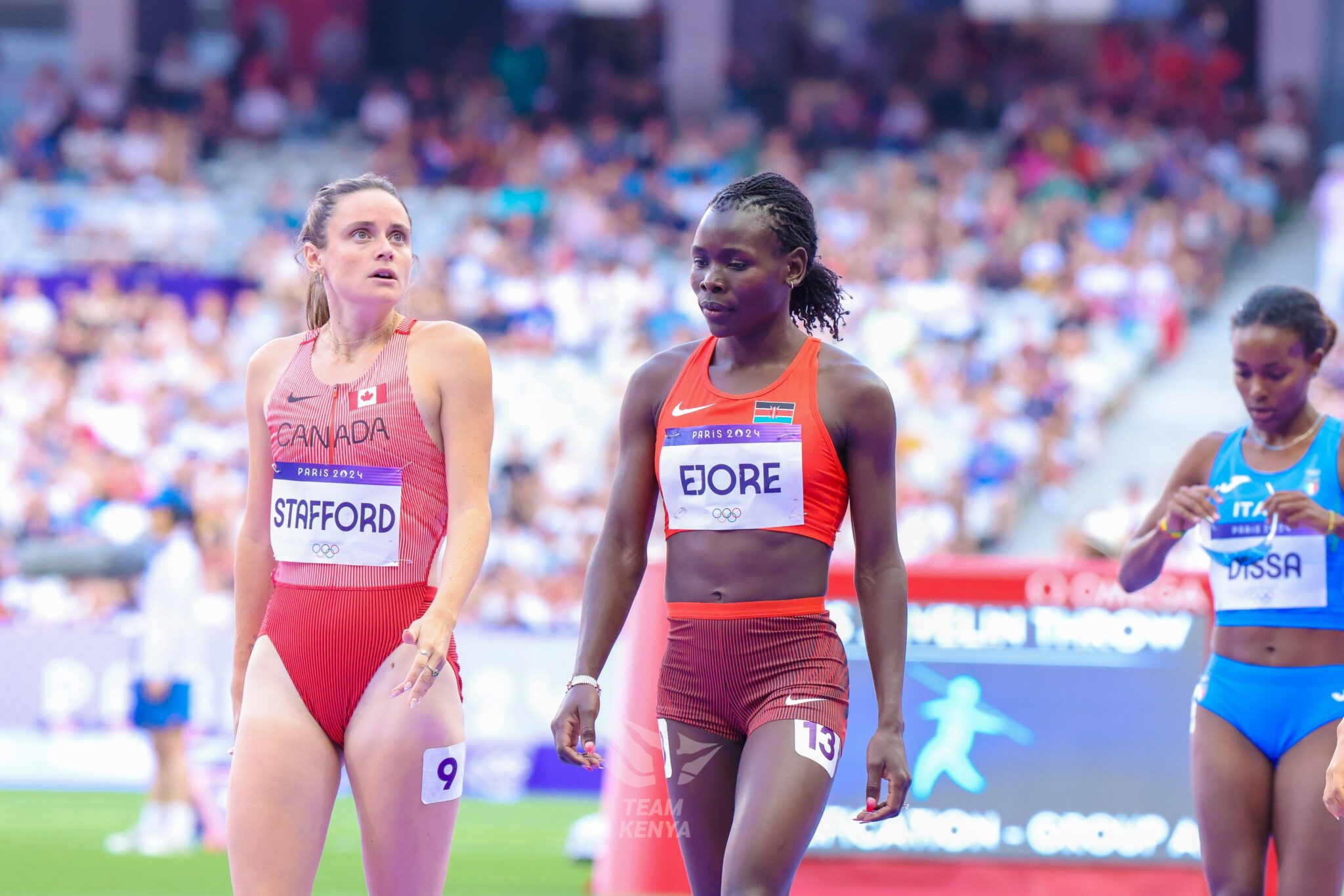
  • World Indoor Championships: Ejore carries Kenya’s medal hopes on tough Day 2

    World Indoor Championships: Ejore carries Kenya’s medal hopes on tough Day 2

    After a promising opening day for Kenya at the World Indoor Championships staged in Nanjing, China where four athletes- Lilian Odira, Noah Kibet, Alex Ngeno and Susan Ejore sailed into their respective 800m semi-finals and 1,500m final respectively, Day 2 was a tough outing as no Kenyan progressed to the next stage or won the finals staged on Saturday.

    Odira, African 800m silver medalist was the first in action on Saturday’s morning session in the women’s 800m semis. The 25-year-old who had clocked 2:04.46 to finish second in Heat 1 on Friday behind Portugal’s Patricia Silva (2:04.44), failed to book a final spot after finishing last in Heat 1. Odira clocked 2:16.12 in a race won by Ethiopia’s Tsige Duguma in 2:03.85.

    Less than half an hour later, Kibet and Ngeno entered the track with the hopes of making it into the finals and raise Kenya’s hopes of medaling, but the hopes were shattered after they both finished fourth in Heats 1 and 3 respectively.

    Kibet, a bronze medalist at the 2021 World Indoor championships in Belgrade stopped the clock at 1:48.90 in a race won by America’s Josh Hoey in 1:45.23. Ngeno on the other hand clocked 1:47.53 trailing behind race winner America’s Brandon Miller (1:46.84), Netherland’s Samuel Chapple (1:47.05) and Algeria’s Heithem Chenitef (1:47.30).

    Both had finished second in their respective heats on Friday with Kibet timing 1:48.31 behind American Josh Hoey while Ngeno crossed the finish line in 1:48.17 with Czech Republic’s Jakub Dudycha winning in 1:48.04.

    One could think the afternoon session could salvage something for Kenya but that didn’t pan as expected. All eyes were on Purity Kajuju Gitonga and Cornelius Kemboi as they took on big shots in the 3,000m.

    Kajuju was eyeing a podium place in a race that yielded the only medal for Kenya in Glasgow last year, through steeplechase record holder Beatrice Chepkoech, as she came up against big names including Australia’s Jessica Hull (an Olympic silver medalist) and Ethiopia’s Freweyni Hailu (a world indoor 1500m champion).

    Just like her compatriots in the morning session, luck was not on her side as she finished a distance eighth after clocking 8:44.56 in a race dominated by the big guns. Hailu won the race in 8:37.21 as America’s Shelby Houlihan came in second in 8:38.26. Hull completed the podium after clocking 8:38.28.

    In the men’s 3,000m race, Kenya’s sole competitor Kemboi- a 5,000m African bronze medalist, failed to handle the pressure and earn the nation her first medal at the ongoing championships. Although he set a new personal best with his 7:49.00, the effort was not enough even for a podium finish as he finished eighth.

    Race favorite Norway’s Jakon Ingebrigtsen, a two-time Olympic champion won the race in 7:46.09- a season best. He was followed closely by Berihu Aregawi of Ethiopia who clocked 7:46.25 also a SB as Australia’s Ky Robinson completed the podium in 7:47.09.

    Kenya’s hopes for a medal this time lies on Susan Ejore who will race in the women’s 1,500m final on Sunday at 3.54pm EAT. She will be up against a stack field comprising the Ethiopian duo of Gudaf Tsegay and Diribe Welteji.

    America’s Heather Maclean and Georgia Hunter Bell from Great Britain will also pose threat to Ejore’s hopes of raising the Kenyan flag high. The race promises fireworks as the five ladies have a PB of under 4:03.

    The United States-based runner clocked 4:12.41 in Heat 1 of the women’s 1500m on Friday afternoon to book her ticket in the final. Tsegay won the Heat after stopping the timer at 4:11.87, ahead of second-placed Sinclaire Johnson of the United States, who ran 4:12.18.

    Others who made Team Kenya to Nanjing included Vivian Chebet, Dorcus Ewoi, Collins Kipruto and Festus Lagat failed to go past their respective heats. Chebet finished fourth in women’s 800m Heat 2 while Kipruto finished last in the men’s 800m Heat 2 as Lagat missed the semis after finishing third in the men’s 1,500m Heat 4 on Friday.
  • Kipchoge to race Sydney Marathon

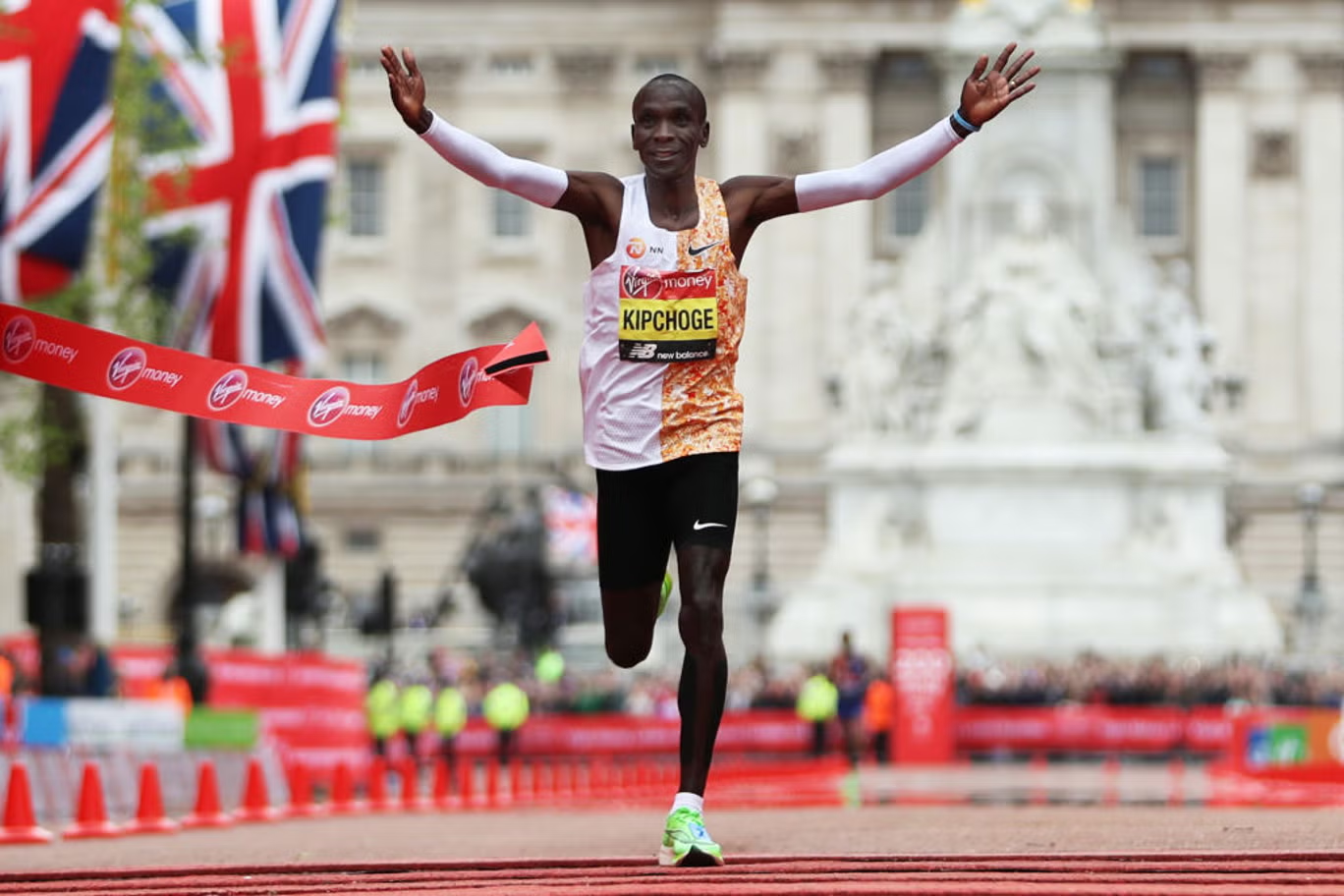
    Kipchoge to race Sydney Marathon

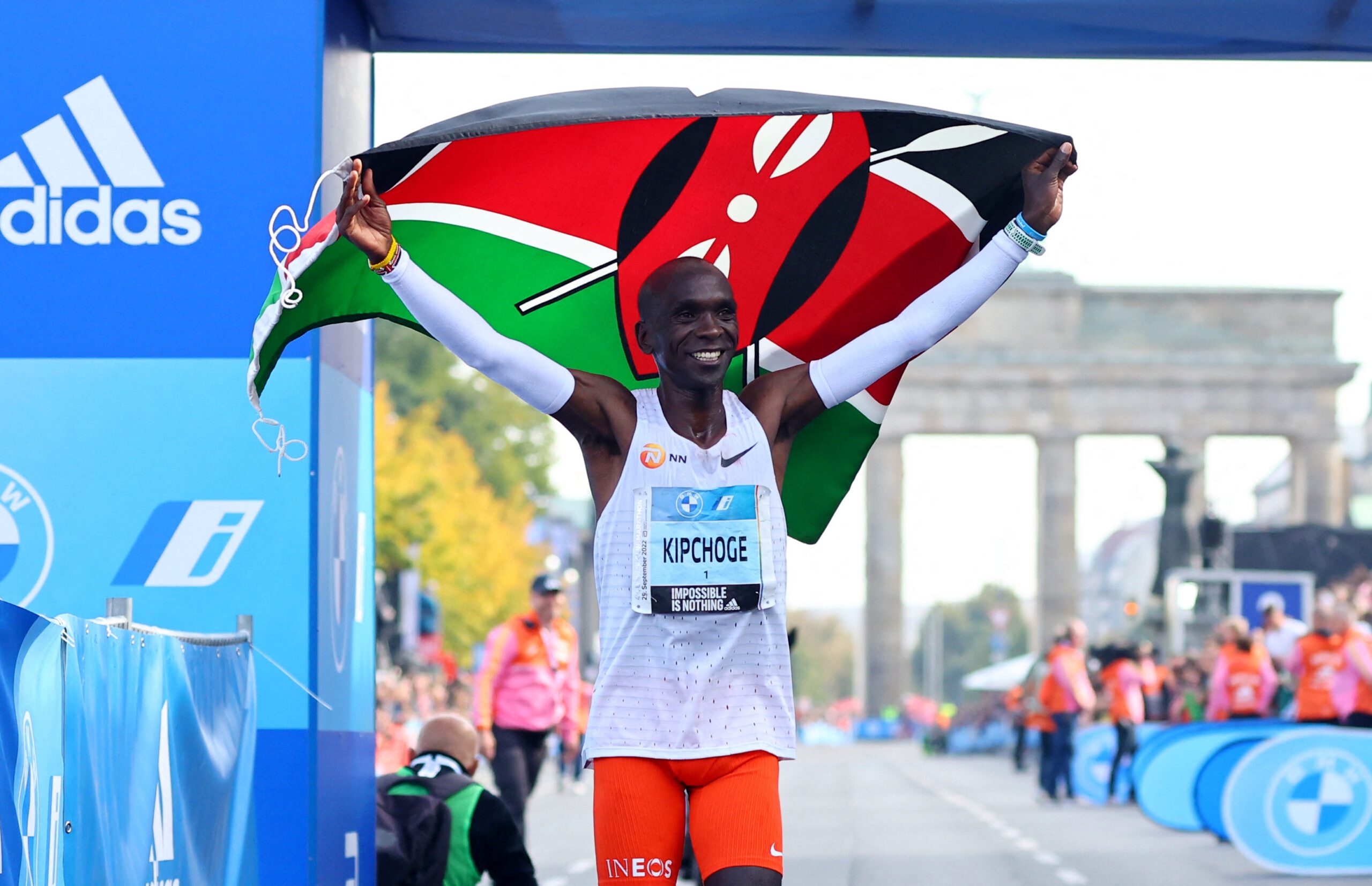
    Two-time Olympic marathon gold medalist Eliud Kipchoge will head Down Under to compete at the TCS Sydney Marathon – a World Athletics Platinum Label road race – on Sunday 31 August.

    Kipchoge is relishing the prospect of racing the TCS Sydney Marathon, which will also mark the event’s debut as part of the Abbott World Marathon Majors series.

    “I am so excited,” said the former world record-holder. “This is not only my first time racing the TCS Sydney Marathon, but also my first time running in Oceania. Competing in Australia is a huge opportunity for me. Sydney looks like a stunning city with so many iconic sights. It’s going to be a new and special experience for me.

    “I’ve been to many places to share my vision of making this world a running world. As I’ve never been to Australia before, I want to help make Australia a running nation.”

    The Kenyan distance running legend, who trains at Kaptagat in Elgeyo Marakwet has an impressive record of 16 victories from 21 official marathon races. This includes 11 wins in World Marathon Majors and an unbeaten streak of 10 marathons between 2014 and 2019.

    He claimed back-to-back Olympic marathon titles in 2016 and 2021. Having broken the world marathon record twice, Kipchoge currently holds the second-fastest marathon time in history with a personal best of 2:01:09. He also owns five of the 13 fastest marathon times ever recorded.

    Prior to racing in Sydney, Kipchoge will compete at the TCS London Marathon on Sunday 27 April.

    On the other hand, 10 athletes will fly the flag for Kenya at the World Athletics Indoor Championships Nanjing 25.

    Noah Kibet, who earned 800m silver back in 2022, is named on the team. Despite being just 20 years of age, this will be his third appearance at a World Indoor Championships.

    Vivian Chebet, who placed fourth in the 800m at last year’s edition in Glasgow, also features on the team, as does Susan Lokayo Ejore, the Kenyan record-holder for the indoor mile.

    Kenyan team for Nanjing:

    Women
    800m: Vivian Chebet Kiprotich, Lilian Odira
    1500m: Susan Lokayo Ejore, Dorcus Ewoi
    3000m: Purity Kajuju Gitonga

    Men
    800m: Noah Kibet, Alex Ngeno Kipngetich, Collins Kipruto
    1500m: Festus Lagat
    3000m: Cornelius Kemboi

  • Omanyala urges quick reopening of stadia as track season unfolds

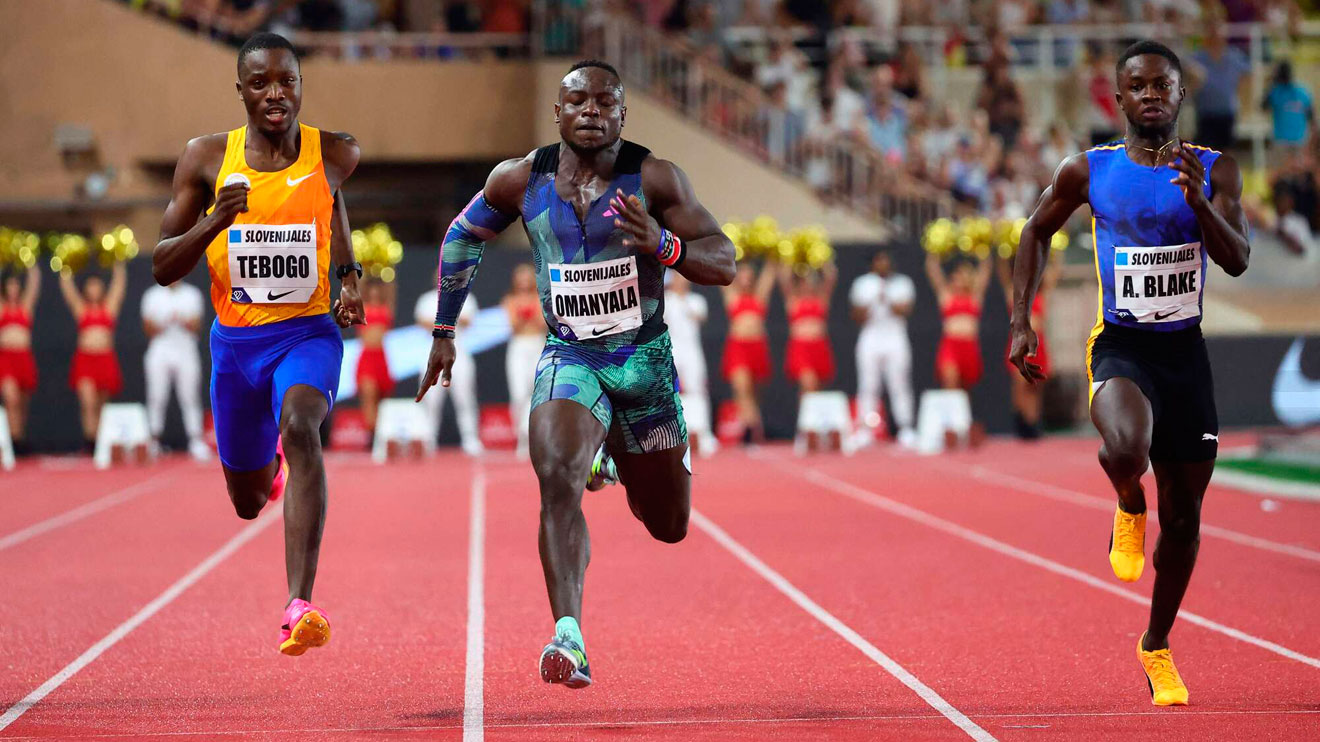
    Omanyala urges quick reopening of stadia as track season unfolds

    Africa’s fastest man, Ferdinand Omanyala, has called for the urgent re-opening of Nyayo National Stadium to athletes as the track and field season gathers pace.

    Kenya’s two major stadiums—Nyayo and Kasarani—remain closed for renovations ahead of the 2025 African Nations Championship (CHAN) and the 2027 Africa Cup of Nations (Afcon), leaving athletes scrambling for proper training venues.

    With the World Indoor Championships set to begin in Nanjing, China, from 21-23 March, followed by the World Relays in Guangzhou in 10-11 May, many athletes have been forced to train on murram tracks—far from ideal for elite-level preparation.

    The 2022 Commonwealth 100m champion, expressed his frustration over the prolonged stadium closures, warning that the lack of tartan tracks is hurting the sprinters.

    “Kasarani was shut down last year and now Nyayo is also closed. That leaves us with no proper training facilities,” Omanyala stated.

    “It’s frustrating because these renovations have dragged on for too long. It’s already March and athletes are still training on murram yet they’ll soon be competing against rivals who have been sharpening their speed on proper tartan tracks.”

    Omanyala urged the government to give athletics the attention it deserves, noting that track and field has consistently brought global glory to Kenya.

    “The government is heavily prioritizing football. I’m not saying football shouldn’t get support, but let’s not forget athletics, which has put Kenya on the world map for decades,” he said.

    “If the government can work closely with Athletics Kenya, we can elevate the sport even further.”

    Currently, Omanyala is gearing up for the 2025 season at Kenyatta University’s track, which he considers a lifeline.

    “This facility came in at the right time. I was talking to my coach and we agreed that without it, we wouldn’t know where to train. Many sprinters have been forced onto murram tracks, which isn’t ideal for high-performance training.”

    Beyond Nyayo and Kasarani, Omanyala called for the speedy completion of the Kip Keino Stadium in Eldoret, a hub for Kenya’s athletics heritage.

    “The government should at least renovate the training track at Kasarani to help us in the meantime. Kip Keino Stadium, being at the heart of athletics in this country, should have been ready by now to offer alternatives.”

    Omanyala, an Olympics semi-finalist, is set to compete in his first international race of the season at the ASA Grand Prix 1 in South Africa on Wednesday evening after opting to skip the indoor season to focus on outdoor events.

    He will be up against fellow Kenyan Mark Otieno. Competition will also come from South African Sprinters Erasmus Emile, Adams Luxolo, and Letebele Karabo, Zimbabwe’s Makusha Ngoni and Botswana’s Boitshwarelo Mothusi.

    National sprints coach Stephen Mwaniki echoed Omanyala’s concerns, emphasizing that murram tracks cannot provide the traction necessary for explosive sprints.

    “For sprinters, traction is everything. Without proper grip between the shoe and the track, you can’t generate the power needed for acceleration,” Mwaniki explained.

    Traction is the grip between the runner’s shoe and track, crucial for propulsion and acceleration. The tactician highlighted the severity of closure of the Nyayo stadium noting that it’s tartan track has markers crucial for events such as the relays.

    “For the World Relay Championships, there are markers given by World Athletics, where athletes exchange the batons which only the Nyayo Stadium has. So without it, we can’t have proper training for the Relays,” Mwaniki emphasized. “The Ministry must act fast and work with the government to ensure these facilities are reopened.”

    He further urged authorities to construct more stadiums, particularly in regions with strong sprinting potential, such as the Coast: “The Coastal region is perfect for sprinters. Completing Mbaraki Stadium would ease overreliance on the few existing facilities.”

  • Breaking one hour barrier to a new era: The evolution of Half Marathon

    Breaking one hour barrier to a new era: The evolution of Half Marathon

    It was not that many years ago that breaking an hour for the half marathon was an amazing feat. But a fortnight ago, we saw that record dip under 57 minutes. That’s running 4:19 mile pace for 13.1 miles.

    The half marathon, a 21.0975-kilometer (13.1-mile) race, has long been a benchmark of endurance and speed. For decades, breaking one hour in the event was considered an extraordinary achievement. But as training, technology, and competition have advanced, so have the records.

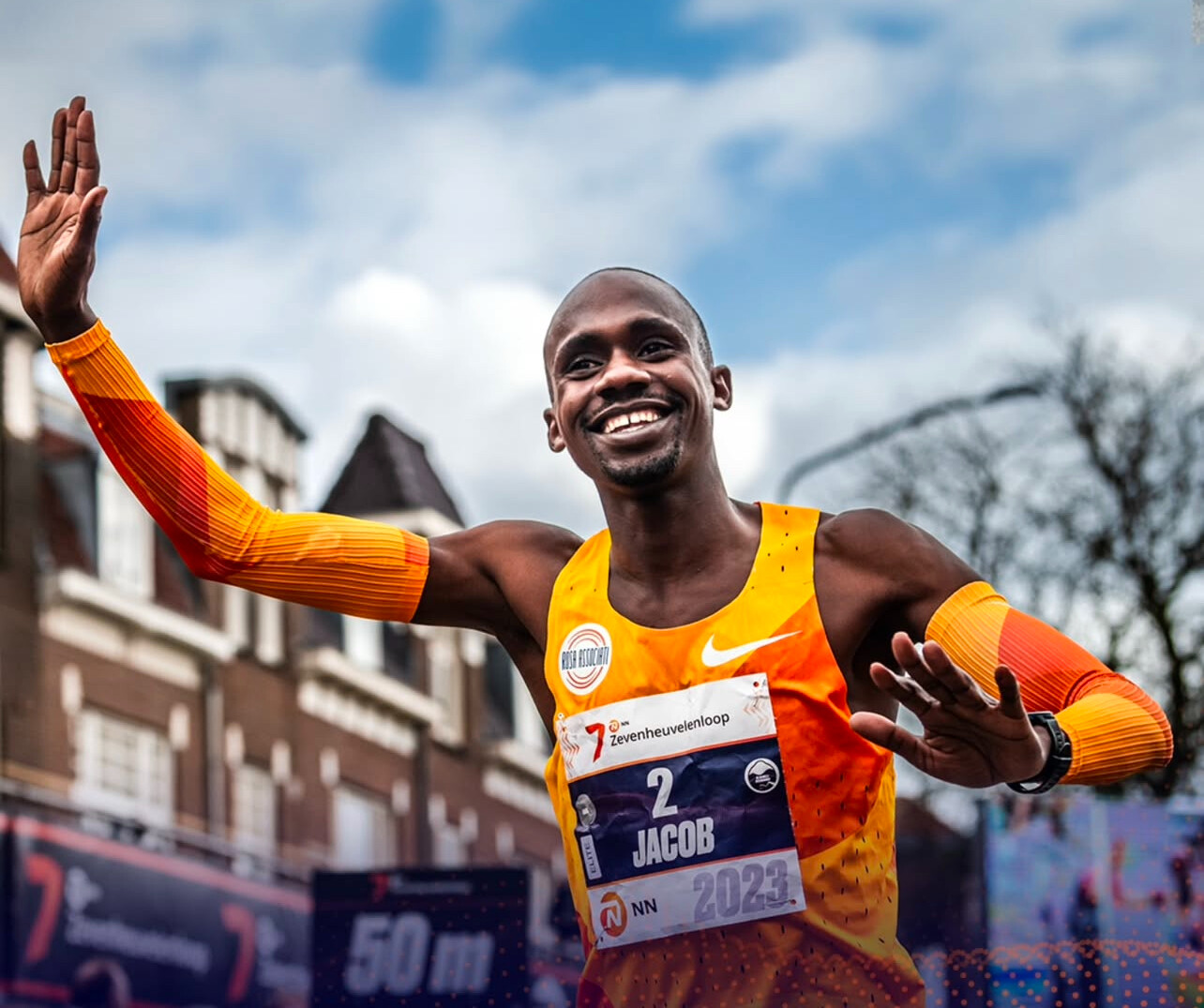
    On 16 February, 2025, Uganda’s Jacob Kiplimo took the event into a new era, becoming the first person to break 57 minutes with a stunning world record of 56:42 at the eDreams Mitja Marató, Barcelona, a World Athletics Gold Label road race.

    With that impressive performance, the 24-year-old two-time world cross country champion improved on Yomif Kejelcha’s previous world record of 57:30 by 48 seconds – the greatest single improvement on the men’s world half marathon record.


    The history of the half marathon

    The half marathon has been a competitive event since at least the early 20th century, though it did not gain widespread popularity until later. It emerged as a race distance that was more accessible than the full marathon but still required a balance of endurance and speed. Unlike the marathon, which has been an Olympic event since 1896, the half marathon has never been included in the Games, but it has had its own World Championships since 1992.

    With the rise of professional distance running and major city half marathons, the event has grown into one of the most participated-in races worldwide. Many view it as a stepping stone to the full marathon, while others appreciate it as a challenging yet more manageable race.


    Breaking one hour The milestones

    The quest to run a half marathon in under one hour became a defining goal for elite male distance runners. While marathon times had been steadily improving throughout the 20th century, the half marathon saw a more gradual progression.

    1960: Australian runner Dave Power ran an unofficial best of 1:01:44.

    1974: Ron Hill of Great Britain set a recognized world best of 1:02:22.

    1978: Italy’s Marcello Fiasconaro improved the mark to 1:01:49.

    1985: Steve Jones of Great Britain ran 1:01:14, bringing the record closer to the one-hour barrier.

    1993: Moses Tanui of Kenya became the first man to break one hour, running 59:47.

    Once Tanui shattered the one-hour barrier, improvements became more frequent, with Kenyan and Ethiopian athletes dominating the event.

    1997: Paul Tergat (Kenya) ran 59:17.

    2005: Samuel Wanjiru (Kenya) ran 59:16, then 58:33 in 2007.

    2010: Zersenay Tadese (Eritrea) set a long-standing record of 58:23.

    2020: Kibiwott Kandie (Kenya) became the first to break 58 minutes, running 57:32.

    2021: Jacob Kiplimo (Uganda) set a new record at 57:31.

    2024: Yomif Kejelcha (Ethiopia) improved it to 57:30.

    2025: Jacob Kiplimo rewrote history with 56:42.


    The women’s half marathon world record

    On the women’s side, the world record has seen significant improvements as well. Ethiopia’s Letesenbet Gidey currently holds the record. Gidey smashed the world record at the Valencia Half Marathon Trinidad Alfonso EDP, clocking 1:02:52 on her debut at the distance at the World Athletics Elite Label road race on 24 October, 2021.

    Competing in the same Spanish city where she broke the world 5,000m record in 2020, Gidey took 70 seconds off the previous world record of 1:04:02 set by former world marathon champion Ruth Chepngetich six months earlier.

    In doing so, 23-year-old Gidey became the first woman to officially break the 64 and 63-minute barriers. She’s also the first debutante to set a world record for the distance.


    Previous records include:

    1982: Joan Benoit Samuelson (USA) ran 1:08:34.

    2001: Elana Meyer (South Africa) became the first woman to break 67 minutes, running 1:06:44.

    2007: Lornah Kiplagat (Netherlands) set a world record of 1:06:25.

    2017: Joyciline Jepkosgei (Kenya) became the first woman under 65 minutes, running 1:04:52.

    2021: Letesenbet Gidey shattered expectations with 1:02:52.


    A new era for the half marathon

    With Kiplimo’s record-breaking 56:41, the half marathon has entered uncharted territory. His ability to maintain a 4:19 per mile pace for 13.1 miles is a testament to the evolution of the sport. Advances in training methods, course selection, pacing strategies, and shoe technology have all contributed to these record-breaking performances.

    The question now is what comes next. Will someone push the limits even further and run under 56 minutes? Will Kiplimo’s record stand for years, or will it spark another round of breakthroughs?

    For now, all eyes turn to Kiplimo’s next challenge: his marathon debut at the London Marathon on 27 April. If his half marathon success is any indication, the world may soon see him make history over 26.2 miles as well.

    One thing is certain—the evolution of the half marathon is far from over, and the best may still be yet to come.

  • Evolution of men’s and women’s marathon world records

    The 42.195km (26.2 miles) might seem like an arbitrary distance, especially in comparison to much rounder distances like 5km, 10km, 20km and 50km, but its importance in the history and development of global athletics cannot be understated.

    Why? Because it is the official distance of the marathon.

    Yes, that ultimate test of endurance, speed and willpower that has captured the imagination of athletes around the world for over a century, creating national heroes out of little-known athletes and inspiring amateurs around the globe to challenge their biology and push their bodies to the very limit of what is humanly possible.

    While victory and personal triumph remain the main objectives of every world-class marathoner, a thrilling battle to beat the clock, along with every other marathoner in history, has added an extra layer of intrigue to the event in recent years.

    From Eliud Kipchoge’s mission to crack the two-hour mark in the men’s marathon to the astonishing marks redefining what’s possible in the women’s marathon, the race against time has become just as fascinating as the race itself.

    This article explores the history of the marathon, highlighting the evolution of the men’s and women’s world records while providing a glimpse at what may be to come in athletics’ most storied distance.

    The origins of the marathon

    Born out of ancient history, and shrouded by myth, the marathon has embedded itself in the zeitgeist of popular culture, creating its own mythos in modern athletics and the Olympic Games.

    The idea behind the event came from an ancient Greek legend recorded by the historian Herodotus, who recounted the arduous journey of a foot courier named Philippides before and after the famed battle of Marathon.

    As the tale goes, Philippides was sent from Athens to Sparta to ask for assistance in the upcoming battle against the invading Persian army. In modern legends, Philippides was then tasked with running from the battlefield at Marathon, back to the city of Athens, in order to proclaim victory in the battle.

    While the exact details of the legend are highly debated, its influence on the modern Olympic Games is unquestionable.

    Recounting the legend of Philippides, particularly his fabled journey from Marathon to Athens, Frenchman Michael Bréal suggested a revival of the legendary run be held as part of the Olympic Games Athens 1896.

    Baron Pierre de Coubertin, founder of the modern Olympic Games, was receptive to the idea, and thus, the marathon was born.

    Early days of Olympic marathon

    Originally held as a race from Marathon to Athens, the marathon would evolve over time, growing in distance and popularity.

    Greece’s Spyridon Louis won the first-ever Olympic marathon at Athens 1896, completing the roughly 40km course in a recorded time of 2:58:50. The three-hour barrier had been broken, but the distance of the marathon would vary from race to race over the next two decades.

    The men’s marathon at the Olympic Games St. Louis 1904 fell on the shorter end of the spectrum at 40km (24.85 miles), while the men’s marathon at the Olympic Games Antwerp 1920 was the longest marathon in Olympic history, measuring 42.750km (26.56 miles).

    Finland’s Hannes Kolehmainen won the “super” marathon at Antwerp 1920, crossing the finish line in a recorded time of 2 hours 32 minutes and 35.8 seconds, closing in on the two-and-a-half hour barrier despite running the longest marathon in Olympic history.

    Ultimately, the distance of the marathon would be standardized at 42.195km by the International Amateur Athletic Federation, now known as World Athletics, in 1921.

    The age of racing against the clock was neigh.

    Race to crack two hours

    There was no official world record kept for the marathon until Kenya’s Paul Tergat ran 2:04:55 at the 2003 Berlin Marathon. Before then, a “world best” existed in the men’s marathon, but World Athletics did not keep an officially ratified world record.

    Tergat’s world record would stand for five years, before Ethopia’s Haile Gebrselassie decreased his time by nearly 30 seconds at the 2007 Berlin Marathon, finishing in a time of 2:04:26.

    Gebrselassie, in turn, became the first man to break the 2 hour and four-minute barrier, crossing the finish line of the 2008 Berlin Marathon in a time of 2:03:59. His record stood for nearly three years, before Kenya’s Patrick Makau Musyoki ran 2:03:38 to set a new world record at the 2011 Berlin Marathon.

    Kenya’s Wilson Kipsang Kiprotich improved on his fellow countrymen’s record with a time of 2:03:23 at the 2013 Berlin Marathon, before Kenya’s Dennis Kimetto became the first man to break the two-hour and three-minute barrier at the 2014 Berlin Marathon, clocking a time of 2:02:57.

    Kimetto’s record held for nearly four years, before the great Eliud Kipchoge smashed the two-hour and two-minute barrier, finishing with a time of 2:01:39 at the 2018 Berlin Marathon.

    Kipchoge would improve his time once more at the 2022 Berlin Marathon, creeping towards the two-hour and one-minute barrier with a time of 2:01:09 – a barrier that was ultimately surpassed by the late Kelvin Kiptum.

    Set at the 2023 Chicago Marathon, Kiptum’s world record of 2:00:35 has yet to be beaten. While the race to break the mythical two-hour barrier is in full swing at marathons across the globe, it will take a truly exceptional performance to achieve the once unimaginable feat.

    Men’s marathon world record progression
    Mark Competitor Country Date Venue
    2:00:35 Kelvin Kiptum Kenya 8 October 2023 Chicago, IL (USA)
    2:01:09 Eliud Kipchoge Kenya 25 September 2022 Berlin, Germany
    2:01:39 Eliud Kipchoge Kenya 16 September 2018 Berlin, Germany
    2:02:57 Dennis Kimetto Kenya 28 September 2014 Berlin, Germany
    2:03:23 Wilson Kipsang Kiprotich Kenya 29 September 2013 Berlin, Germany
    2:03:38 Patrick Makau Musyoki Kenya 25 September 2011 Berlin, Germany
    2:03:59 Haile Gebrselassie Ethiopia 28 September, 2008 Berlin, Germany
    2:04:26 Haile Gebrselassie Ethiopia 30 September, 2007 Berlin, Germany
    2:04:55 Paul Tergat Kenya 28 September, 2003 Berlin, Germany

    Race to inch closer

    The women’s marathon was included on the Olympic sports program for the first-time at the Olympic Games Los Angeles 1984. Team USA’s Joan Benoit won the race in a time of 2:24:52, setting an Olympic record in the process.

    Like the men’s marathon, an official world record for the women’s marathon wasn’t kept until the early 2000s, when Great Britain’s Paula Radcliffe ran an astonishing time of 2:15:25 to set the global benchmark for the women’s marathon.

    Her blistering pace proved to be a real challenge for the world’s best female marathoners, standing as the world record for over 16 years until Kenya’s Brigid Kosgei took more than a minute off her time at the 2019 Chicago Marathon.

    Kosgei’s own world record of 2:14:04 seemed like an equally daunting challenge for the world’s best marathoners, but Ethopia’s Tigst Assefa stunned the world by taking over two minutes off the Kenyan runner’s time at the 2023 Berlin Marathon, clocking a time 2:11:53.

    Assefa’s time dominated headlines heading into the Olympic Games Paris 2024, where the Ethiopian runner claimed a silver medal at the conclusion of a thrilling sprint finish against the Netherlands’s Sifan Hassan.

    Nonetheless, Assefa’s time would be challenged before the season was over, with Kenya’s Ruth Chepngetich stealing headlines with her blazing fast time at the 2024 Chicago Marathon.

    With a time of 2:09:56, Chepngetich became the first woman to dip under the two-hour and ten-minute barrier.

    However, her time is still awaiting ratification from World Athletics, meaning nothing is completely official at the time of this article.

    Still, her time represents an exciting time in the women’s marathon, where the race against the clock has become as compelling as the individual races themselves.

    Women’s marathon world record progression
    Mark Competitor Country Date Venue
    2:09:56 (awaiting ratification) Ruth Chepngetich Kenya 13 October, 2024 Chicago, IL (USA)
    2:11:53 Tigst Assefa Ethiopia 24 September, 2023 Berlin, Germany
    2:14:04 Brigid Kosgei Kenya 13 October, 2019 Chicago, IL (USA)
    2:15:25 Paula Radcliffe Great Britain 13 April, 2003 London, GBR

    Future of marathon

    It’s an undeniably exciting time for both the men’s and women’s marathon. With recording-breaking performances dominating the conversation surrounding both events, it’s worth looking ahead towards the future.

    Ethiopia’s Tamirat Tola, who won the men’s marathon at Paris 2024, is eyeing his next great prize: breaking the world record.

    “I hope to attack the world record,” he said in a recent interview with Olympics.com. “I hope to be able to run in Berlin next year. If I’m good shape and if my training goes well, I’d like to try the world record in Berlin.”

    Of course, he’ll be eager to try to break the two-hour barrier – a feat achieved only by Eliud Kipchoge under ideal, manufactured conditions in 2019.

    The world record battle will likely remain a fixture in the women’s marathon as well, with two-time Olympic medalist Catherine Ndereba predicting quicker times to come.

    “Technology has played a big part in the world marathon,” Ndereba told The Star. “Athletes can run even faster because of some of the shoes they wear which points to even greater stories and records in the years to come.”

    No matter the amount of marathon world records that fall in the years to come, expect a thrilling journey as athletics’ most storied event continues to evolve.

    Source: Olympics.com

  • Lord Coe sends warning to age cheats, lauds efforts to curb doping menace

    World Athletics president Sebastian Coe has warned that age cheats will be stripped off all their Olympics and World Championships titles they may have won in the past and also serve severe punishment.

    Coe, who arrived in the country on Wednesday, spoke at a press briefing at Athletes Kenya headquarters, Riadha House after meeting President William Ruto and Sports Cabinet Secretary Salim Mvurya. He was accompanied by Athletes Kenya President Jack Tuwei.

    The Briton said World Athletics in conjunction with Athletics Kenya have formed task forces that are working to curb age cheating and results manipulation.

    “We will try to ensure we don’t have age group competitions whose athletes’ ages are not know,: said Coe.

    The former 800m world record holder also lauded Kenya for its efforts to curb the doping menace which had threatened to make the country a sporting pariah: “I know the Athletic Integrity Unit, which is the independent organization within World Athletics that monitors and conducts all our testing programs, is very satisfied by the progress that is being made.

    “The funding made available by the Kenyan government has been extremely helpful in this fight.”

    We are moving in the right direction,” he added saying there were “better systems in place… and we’re moving absolutely in the right direction. But we are coming from a little way back. We will keep faith with the system and the people I trust to challenge the scourge.”

    Last month AK announced that Olympians are among 34 Kenyan athletes being investigated by WA for age cheating with some cases dating back to 2016.

    While AK confirmed to have submitted the 34 names to AIU including four runners who were chopped of Team Kenya for the World u-20 athletics championships in Peru last year, President Coe said the 34 cases will be handled by AIU.

    Nearly 130 Kenyan athletes, mainly long-distance runners, have been sanctioned for drugs offences since 2017.

    In June, Kenya handed out its first lifetime ban to marathon runner Beatrice Toroitich and a six-year ban to 10km record-holder Rhonex Kipruto.

    Coe warned the number of sanctioned individuals could continue to increase, but that this was due to the success of its stringent testing regime.

    To add salt to the doping wound, the Kenyan athletics has also been bedeviled by increasing cases of domestic violence/gender-based violence (GBV), involving athletes.

    Reflecting on the emerging threat, Coe admitted the GBV is not alien to Kenyan athletics but nonetheless noted the potential of sports as a vehicle to create awareness about the vice.

    “And the second key area, and the very prominent challenge, is gender-based violence, not entirely or uniquely linked to sport, but recognizing that we can use sport as a way of raising the profile of this challenge,” the world governing body boss said.

    The former Olympic champion is set to vie for the presidency of the International Olympic Committee (IOC) in Greece from 18-21 March against six other candidates.

    The winner will succeed Thomas Bach, whose presidency formally ends on 23 June, after a three-month transition period.

  • Dr Kipchumba: Hunt for quick riches stalling Kenyan long-distance dominance

    Dr Kipchumba: Hunt for quick riches stalling Kenyan long-distance dominance

    Despite Kenya’s storied history in distance running, the country has struggled to reclaim its throne in the 5,000m and 10,000m men’s events at the World Championships.

    Dr. Byron Kipchumba, a sports science and management expert, believes the pursuit of instant success has crippled Kenya’s dominance in the men’s long-distance events.

    Kipchumba holds a PHD in kinesiology, the scientific study of human movement. It includes the study of anatomy, physiology, biomechanics and psychology. He further serves as an educator and coach at KIPRUN, a training camp located in Iten, Elgeyo Marakwet County. Kipchumba further runs a sports medicine organization, “Running the Race”, which offers medical services to athletes in Iten and Eldoret

    With the Tokyo 2025 World Championships fast approaching, Kenya faces an uphill battle in these events.

    The last time the nation struck gold in the men’s 10,000m was in Edmonton 2001, thanks to Charles Kamathi. Since then, Kenya has only come close three times through Geoffrey Kamworor (Beijing 2015), Stanley Mburu (Eugene 2022) and Daniel Ebenyo (Budapest 2023) who struck silver medals at the global showpiece.

    The men’s 5,000m has been no different. Kenya’s last world title came in 2005 through Benjamin Limo.

    Since then, near misses have defined the event, with Eliud Kipchoge (Osaka 2007), Caleb Ndiku (Beijing 2015) and Jacob Krop (Eugene 2022) coming close with claiming silver medals.

    Kipchumba argues that the growing appeal of road races is draining talent from Kenya’s traditional strongholds on the track.

    “The World Championships and Olympics happen once every few years, but road races, 5K, 10K and 15K are frequent, offering quick financial rewards. Many athletes aren’t willing to wait for track glory, opting instead for the road,” Kipchumba who won the Vienna City Marathon in 2019 in 2:06:56 explains.

    He warns that this shift is stripping the nation of its long-distance depth: “Kenya has talent in abundance, but the individual focus on financial gain has overshadowed the patriotic drive that once fueled our dominance.”

    This, he says, is what has made male athletes shift to the road races while providing stark contrast between male and female athletes.

    “Women are more patient, resilient and focused, unlike the men who want quick and immediate success. As a result, they have a shorter running career on average as compared to their female counterparts,” he noted.

    In the women’s event, triple Olympic 1500m champion Faith Kipyegon is the reigning 5,000m world champion having picked up from Hellen Obiri who dominated in London 2017 and Doha 2019.

    In the 10,000m, Kenya’s last medal was in Beijing 2015 through Vivian Cheruiyot with Obiri coming close in Eugene 2022 after claiming silver.

    Kipchumba insists the country has failed to transition properly from past champions. “We never prepared to replace stars like Limo and that has cost us dearly,” he says.

    He further points to the dwindling participation in cross-country events as a major setback: “Limo was a cross country athlete and that was essential in giving him the endurance and speed necessary for the 5000m.”

  • Ethiopian duo of Takele and Kebede earn wins in Tokyo

    Ethiopian duo of Takele and Kebede earn wins in Tokyo

    The Tokyo Marathon opened the 2025 World Major Marathon season. On the men’s side, Tadese Takele won in 2:03:23, achieving a personal best time by one second and earning his first World Major Marathon win.

    Takele had set his previous personal best (2:03:24) during a third place finish at the 2023 Berlin Marathon.

    Fellow Ethiopian Deresa Geleta finished in second in 2:03:51 and Kenyan Vincent Kipkemoi Ngetich finished third in 2:04:00.

    Kenyan Titus Kipruto finished fourth in 2:05:34.

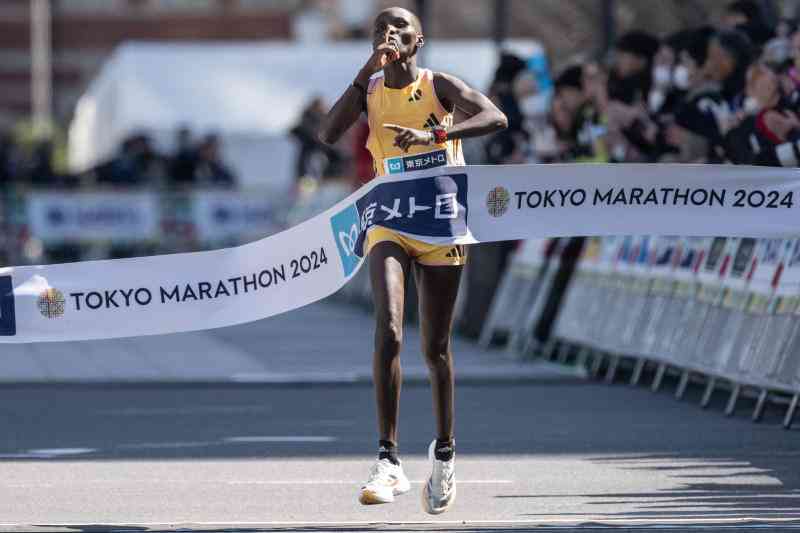
    On the women’s side, Ethiopian Sutume Asefa Kebede followed up her 2024 Tokyo Marathon victory with another first place title in 2025, running 2:16.31.

    Kenyan Winfridah Moraa Moseti finished in second in 2:16:46, and Ethiopian Hawi Feysa finished third in 2:17:00. Kenyan Magdalyne Masai was fourth in 2:19.28.

    Tokyo Marathon 2025 Men’s Top Ten Finishers

    1. Tadese Takele (ETH)- 2:03:23
    2. Deresa Geleta (ETH)- 2:03:51
    3. Vincent Kipkemoi Ngetich (KEN)- 2:04:00
    4. Titus Kipruto (KEN)- 2:05:34
    5. Mulugeta Asefa Uma (ETH)- 2:05:46
    6. Benson Kipruto (KEN)- 2:05:46
    7. Geoffrey Toroitich (KEN) – 2:05:46
    8. Suldan Hassan (SWE) – 2:05:57 (NR)
    9. Joshua Cheptegei (UGA) – 2:05:59
    10. Tubasa Ichiyama (JPN) – 2:06:00

    Tokyo Marathon 2025 Women’s Top Ten Finishers

    1. Sutume Asefa Kebede (ETH) – 2:16:31
    2. Winfridah Moraa Moseti (KEN) – 2:16:56
    3. Hawi Feysa (ETH) – 2:17:00
    4. Magdalyne Masai (KEN) – 2:19:28
    5. Rosemary Wanjiru (KEN) – 2:19:57
    6. Desi Jisa Mokonin (BRN) – 2:20:07
    7. Gotytom Gebreslase (ETH) – 2:20:25
    8. Deshun Zhang (CHN) – 2:20:53
    9. Jessica Stenson (AUS) – 2:22:56
    10. Yuka Ando (JPN) – 2:23:37
  • Wanjiru ready to silence rivals as Kipruto seeks crown defence in Tokyo tomorrow

    Wanjiru ready to silence rivals as Kipruto seeks crown defence in Tokyo tomorrow

    The 2023 Tokyo Marathon champion Rosemary Wanjiru will be making another grand return to the streets of Tokyo, Japan for another scintillating marathon tomorrow full of confidence she claim comes from adequate training at her base in Iten.

    Wanjiru, who placed second last year and is the 2022 Berlin Marathon runner-up returns to a country where her athletics career was birthed.

    As she sets out to reclaim her 2023 title, Wanjiru said yesterday that she only hoped to run a good race in the first World Marathon Major of 2025.

    “When I start the race on Sunday, my prayer will be one; to run a good race and finish strong,” Wanjiru who landed in Tokyo earlier in the week said.

    The Iten-based long distance star said she draws her confidence for the Sunday race from months of training.

    “I am feeling great and ready for the race. My preparations were pretty good and that give me the confidence to do my best in this year’s race,” added Wanjiru.

    Last year, Ethiopian Sutume Asefa Kebede took the women’s crown while Benson Kipruto cruised to a stunning victory in the men’s marathon.

    Wanjiru says she was also well prepared to compete once again with the defending champion in the 42km race that observers say will be catfight.

    “I got a strong support from my coaches, family and management and I thank everyone for making the preparations possible,” the 2015 African Games 5000m silver medalist said.

    With her second place in the 2024 Tokyo Marathon, Wanjiru defeated big names among them Olympic champion Sifan Hassan of the Netherlands, who finished fourth in the contest.

    At the 2024 edition, the podium seemed decided at 30km, a mark where Wanjiru, Kebede and Amane Beriso crossed in 1:36:43.

    Beriso was later dropped, and Kebede managed to shake off Wanjiru and went for the victory over the closing kilometers.

    While a teenager, Wanjiru relocated to Japan where her athletics career was nurtured before she returned to Kenya to make waves.

    “Japan is my second home and competing at the Tokyo Marathon makes me feel great. I was here that my athletics journey started and it makes feel good whenever I return,” Wanjiru a 2:16:14 career best runner from Tokyo last year added.

    Wanjiru, 30, will be up against defending champion Sutume Kebede of Ethiopia who set a Japanese all-comers’ record of 2:15:55 when winning in Tokyo last year. Ethiopia’s Tigist Ketema, who ran 2:16:07 on her debut in Dubai just over a year ago, is another leading contender, along with her compatriots Hawi Feysa, who won in Frankfurt in October in 2:17:25, 2022 world champion Gotytom Gebreslase and 2021 London Marathon runner-up Degitu Azimeraw. Japan’s Ai Hosoda and Yuka Ando will join them on the start line.

    The women’s elite field features a total of nine sub-2:20 runners, including four who have dipped under 2:18.

    Last year, despite emerging second in Tokyo and rising to the sixth place in the world all-time list, Wanjiru could not make it to Paris Olympics. She was named in the initial Olympics squad but could not make the final list when the team was whittled down.

    In the men’s race, defending champion Benson Kipruto, who set a Japanese all-comers’ record when winning in Tokyo last year in 2:02:16, will be joined in the men’s race by Uganda’s Joshua Cheptegei, the world 5000m and 10,000m record-holder who returns to the roads to contest his second marathon after his 2:08:59 debut in Valencia in 2023.

    After winning in Tokyo, Kipruto became an Olympic bronze medalist as he ran 2:07:00 to finish third in Paris. Now he will aim to become the first man to win back-to-back Tokyo Marathon titles since Birhanu Legese in 2019 and 2020. Kipruto also won the Boston Marathon in 2021 and the Chicago Marathon in 2022, and was runner-up in Chicago in 2023.

    But Legese is also in action in Tokyo, and the 30-year-old has the chance to become the first three-time winner of the elite men’s race. The Ethiopian remains the ninth-fastest marathon runner in history with the PB of 2:02:48 he set in Berlin in 2019.

    The field features six sub-2:04 athletes, with Kipruto and Legese joined by Ethiopia’s Deresa Geleta, the Olympic fifth-place finisher and Valencia Marathon runner-up who has a best of 2:02:38, plus 2023 Berlin Marathon third-place finisher Tadese Takele, this year’s Xiamen Marathon winner Dawit Wolde and Kenya’s Vincent Kipkemoi Ngetich, who was third in Tokyo last year.

    The line-up also includes Ethiopia’s world bronze medalist Leul Gebresilase, Uganda’s Stephen Kissa and Japan’s Yohei Ikeda and Akira Akasaki