Blog

  • Evolution of men’s and women’s marathon world records

    The 42.195km (26.2 miles) might seem like an arbitrary distance, especially in comparison to much rounder distances like 5km, 10km, 20km and 50km, but its importance in the history and development of global athletics cannot be understated.

    Why? Because it is the official distance of the marathon.

    Yes, that ultimate test of endurance, speed and willpower that has captured the imagination of athletes around the world for over a century, creating national heroes out of little-known athletes and inspiring amateurs around the globe to challenge their biology and push their bodies to the very limit of what is humanly possible.

    While victory and personal triumph remain the main objectives of every world-class marathoner, a thrilling battle to beat the clock, along with every other marathoner in history, has added an extra layer of intrigue to the event in recent years.

    From Eliud Kipchoge’s mission to crack the two-hour mark in the men’s marathon to the astonishing marks redefining what’s possible in the women’s marathon, the race against time has become just as fascinating as the race itself.

    This article explores the history of the marathon, highlighting the evolution of the men’s and women’s world records while providing a glimpse at what may be to come in athletics’ most storied distance.

    The origins of the marathon

    Born out of ancient history, and shrouded by myth, the marathon has embedded itself in the zeitgeist of popular culture, creating its own mythos in modern athletics and the Olympic Games.

    The idea behind the event came from an ancient Greek legend recorded by the historian Herodotus, who recounted the arduous journey of a foot courier named Philippides before and after the famed battle of Marathon.

    As the tale goes, Philippides was sent from Athens to Sparta to ask for assistance in the upcoming battle against the invading Persian army. In modern legends, Philippides was then tasked with running from the battlefield at Marathon, back to the city of Athens, in order to proclaim victory in the battle.

    While the exact details of the legend are highly debated, its influence on the modern Olympic Games is unquestionable.

    Recounting the legend of Philippides, particularly his fabled journey from Marathon to Athens, Frenchman Michael Bréal suggested a revival of the legendary run be held as part of the Olympic Games Athens 1896.

    Baron Pierre de Coubertin, founder of the modern Olympic Games, was receptive to the idea, and thus, the marathon was born.

    Early days of Olympic marathon

    Originally held as a race from Marathon to Athens, the marathon would evolve over time, growing in distance and popularity.

    Greece’s Spyridon Louis won the first-ever Olympic marathon at Athens 1896, completing the roughly 40km course in a recorded time of 2:58:50. The three-hour barrier had been broken, but the distance of the marathon would vary from race to race over the next two decades.

    The men’s marathon at the Olympic Games St. Louis 1904 fell on the shorter end of the spectrum at 40km (24.85 miles), while the men’s marathon at the Olympic Games Antwerp 1920 was the longest marathon in Olympic history, measuring 42.750km (26.56 miles).

    Finland’s Hannes Kolehmainen won the “super” marathon at Antwerp 1920, crossing the finish line in a recorded time of 2 hours 32 minutes and 35.8 seconds, closing in on the two-and-a-half hour barrier despite running the longest marathon in Olympic history.

    Ultimately, the distance of the marathon would be standardized at 42.195km by the International Amateur Athletic Federation, now known as World Athletics, in 1921.

    The age of racing against the clock was neigh.

    Race to crack two hours

    There was no official world record kept for the marathon until Kenya’s Paul Tergat ran 2:04:55 at the 2003 Berlin Marathon. Before then, a “world best” existed in the men’s marathon, but World Athletics did not keep an officially ratified world record.

    Tergat’s world record would stand for five years, before Ethopia’s Haile Gebrselassie decreased his time by nearly 30 seconds at the 2007 Berlin Marathon, finishing in a time of 2:04:26.

    Gebrselassie, in turn, became the first man to break the 2 hour and four-minute barrier, crossing the finish line of the 2008 Berlin Marathon in a time of 2:03:59. His record stood for nearly three years, before Kenya’s Patrick Makau Musyoki ran 2:03:38 to set a new world record at the 2011 Berlin Marathon.

    Kenya’s Wilson Kipsang Kiprotich improved on his fellow countrymen’s record with a time of 2:03:23 at the 2013 Berlin Marathon, before Kenya’s Dennis Kimetto became the first man to break the two-hour and three-minute barrier at the 2014 Berlin Marathon, clocking a time of 2:02:57.

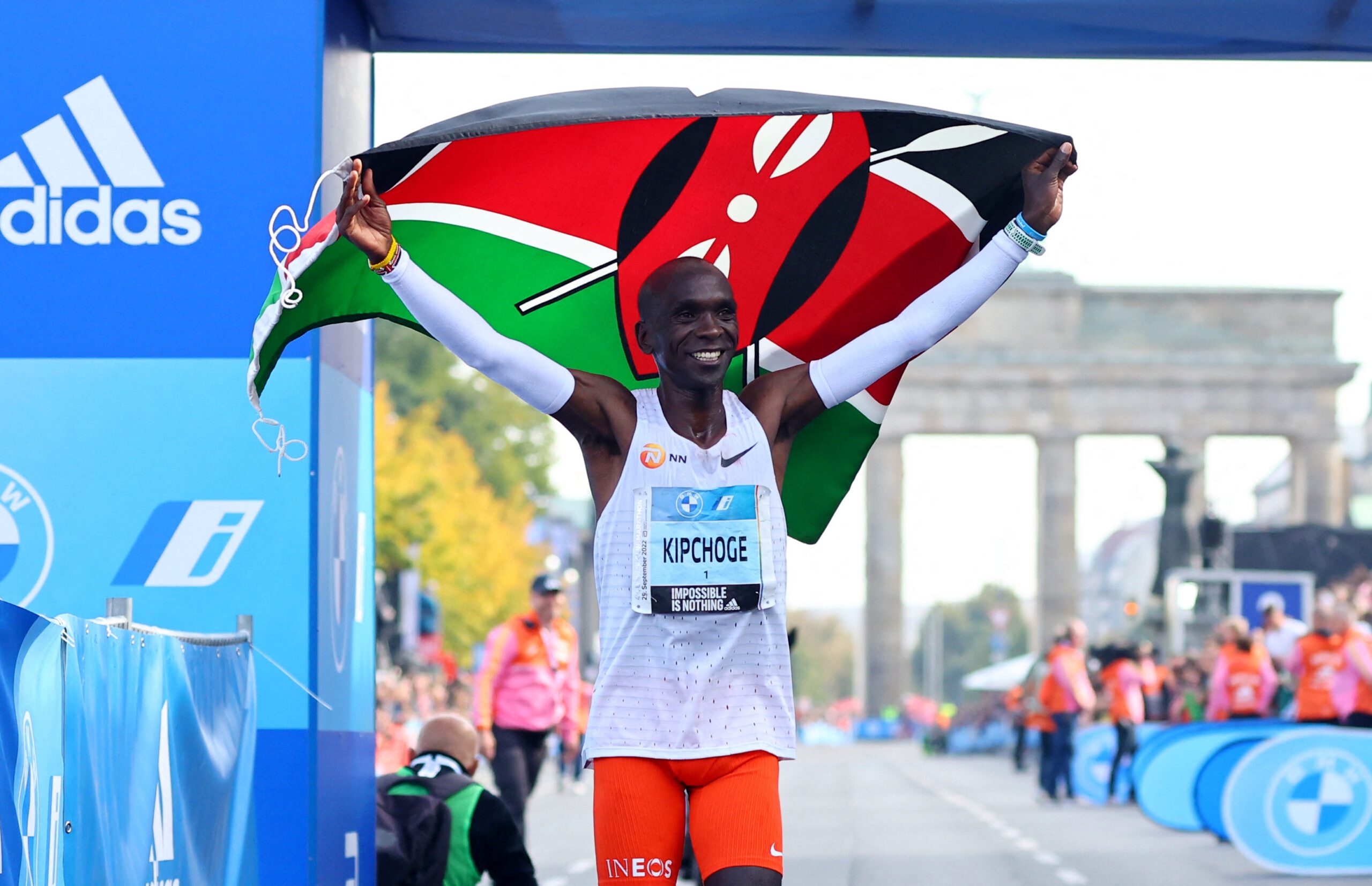
    Kimetto’s record held for nearly four years, before the great Eliud Kipchoge smashed the two-hour and two-minute barrier, finishing with a time of 2:01:39 at the 2018 Berlin Marathon.

    Kipchoge would improve his time once more at the 2022 Berlin Marathon, creeping towards the two-hour and one-minute barrier with a time of 2:01:09 – a barrier that was ultimately surpassed by the late Kelvin Kiptum.

    Set at the 2023 Chicago Marathon, Kiptum’s world record of 2:00:35 has yet to be beaten. While the race to break the mythical two-hour barrier is in full swing at marathons across the globe, it will take a truly exceptional performance to achieve the once unimaginable feat.

    Men’s marathon world record progression
    Mark Competitor Country Date Venue
    2:00:35 Kelvin Kiptum Kenya 8 October 2023 Chicago, IL (USA)
    2:01:09 Eliud Kipchoge Kenya 25 September 2022 Berlin, Germany
    2:01:39 Eliud Kipchoge Kenya 16 September 2018 Berlin, Germany
    2:02:57 Dennis Kimetto Kenya 28 September 2014 Berlin, Germany
    2:03:23 Wilson Kipsang Kiprotich Kenya 29 September 2013 Berlin, Germany
    2:03:38 Patrick Makau Musyoki Kenya 25 September 2011 Berlin, Germany
    2:03:59 Haile Gebrselassie Ethiopia 28 September, 2008 Berlin, Germany
    2:04:26 Haile Gebrselassie Ethiopia 30 September, 2007 Berlin, Germany
    2:04:55 Paul Tergat Kenya 28 September, 2003 Berlin, Germany

    Race to inch closer

    The women’s marathon was included on the Olympic sports program for the first-time at the Olympic Games Los Angeles 1984. Team USA’s Joan Benoit won the race in a time of 2:24:52, setting an Olympic record in the process.

    Like the men’s marathon, an official world record for the women’s marathon wasn’t kept until the early 2000s, when Great Britain’s Paula Radcliffe ran an astonishing time of 2:15:25 to set the global benchmark for the women’s marathon.

    Her blistering pace proved to be a real challenge for the world’s best female marathoners, standing as the world record for over 16 years until Kenya’s Brigid Kosgei took more than a minute off her time at the 2019 Chicago Marathon.

    Kosgei’s own world record of 2:14:04 seemed like an equally daunting challenge for the world’s best marathoners, but Ethopia’s Tigst Assefa stunned the world by taking over two minutes off the Kenyan runner’s time at the 2023 Berlin Marathon, clocking a time 2:11:53.

    Assefa’s time dominated headlines heading into the Olympic Games Paris 2024, where the Ethiopian runner claimed a silver medal at the conclusion of a thrilling sprint finish against the Netherlands’s Sifan Hassan.

    Nonetheless, Assefa’s time would be challenged before the season was over, with Kenya’s Ruth Chepngetich stealing headlines with her blazing fast time at the 2024 Chicago Marathon.

    With a time of 2:09:56, Chepngetich became the first woman to dip under the two-hour and ten-minute barrier.

    However, her time is still awaiting ratification from World Athletics, meaning nothing is completely official at the time of this article.

    Still, her time represents an exciting time in the women’s marathon, where the race against the clock has become as compelling as the individual races themselves.

    Women’s marathon world record progression
    Mark Competitor Country Date Venue
    2:09:56 (awaiting ratification) Ruth Chepngetich Kenya 13 October, 2024 Chicago, IL (USA)
    2:11:53 Tigst Assefa Ethiopia 24 September, 2023 Berlin, Germany
    2:14:04 Brigid Kosgei Kenya 13 October, 2019 Chicago, IL (USA)
    2:15:25 Paula Radcliffe Great Britain 13 April, 2003 London, GBR

    Future of marathon

    It’s an undeniably exciting time for both the men’s and women’s marathon. With recording-breaking performances dominating the conversation surrounding both events, it’s worth looking ahead towards the future.

    Ethiopia’s Tamirat Tola, who won the men’s marathon at Paris 2024, is eyeing his next great prize: breaking the world record.

    “I hope to attack the world record,” he said in a recent interview with Olympics.com. “I hope to be able to run in Berlin next year. If I’m good shape and if my training goes well, I’d like to try the world record in Berlin.”

    Of course, he’ll be eager to try to break the two-hour barrier – a feat achieved only by Eliud Kipchoge under ideal, manufactured conditions in 2019.

    The world record battle will likely remain a fixture in the women’s marathon as well, with two-time Olympic medalist Catherine Ndereba predicting quicker times to come.

    “Technology has played a big part in the world marathon,” Ndereba told The Star. “Athletes can run even faster because of some of the shoes they wear which points to even greater stories and records in the years to come.”

    No matter the amount of marathon world records that fall in the years to come, expect a thrilling journey as athletics’ most storied event continues to evolve.

    Source: Olympics.com

  • Lord Coe sends warning to age cheats, lauds efforts to curb doping menace

    World Athletics president Sebastian Coe has warned that age cheats will be stripped off all their Olympics and World Championships titles they may have won in the past and also serve severe punishment.

    Coe, who arrived in the country on Wednesday, spoke at a press briefing at Athletes Kenya headquarters, Riadha House after meeting President William Ruto and Sports Cabinet Secretary Salim Mvurya. He was accompanied by Athletes Kenya President Jack Tuwei.

    The Briton said World Athletics in conjunction with Athletics Kenya have formed task forces that are working to curb age cheating and results manipulation.

    “We will try to ensure we don’t have age group competitions whose athletes’ ages are not know,: said Coe.

    The former 800m world record holder also lauded Kenya for its efforts to curb the doping menace which had threatened to make the country a sporting pariah: “I know the Athletic Integrity Unit, which is the independent organization within World Athletics that monitors and conducts all our testing programs, is very satisfied by the progress that is being made.

    “The funding made available by the Kenyan government has been extremely helpful in this fight.”

    We are moving in the right direction,” he added saying there were “better systems in place… and we’re moving absolutely in the right direction. But we are coming from a little way back. We will keep faith with the system and the people I trust to challenge the scourge.”

    Last month AK announced that Olympians are among 34 Kenyan athletes being investigated by WA for age cheating with some cases dating back to 2016.

    While AK confirmed to have submitted the 34 names to AIU including four runners who were chopped of Team Kenya for the World u-20 athletics championships in Peru last year, President Coe said the 34 cases will be handled by AIU.

    Nearly 130 Kenyan athletes, mainly long-distance runners, have been sanctioned for drugs offences since 2017.

    In June, Kenya handed out its first lifetime ban to marathon runner Beatrice Toroitich and a six-year ban to 10km record-holder Rhonex Kipruto.

    Coe warned the number of sanctioned individuals could continue to increase, but that this was due to the success of its stringent testing regime.

    To add salt to the doping wound, the Kenyan athletics has also been bedeviled by increasing cases of domestic violence/gender-based violence (GBV), involving athletes.

    Reflecting on the emerging threat, Coe admitted the GBV is not alien to Kenyan athletics but nonetheless noted the potential of sports as a vehicle to create awareness about the vice.

    “And the second key area, and the very prominent challenge, is gender-based violence, not entirely or uniquely linked to sport, but recognizing that we can use sport as a way of raising the profile of this challenge,” the world governing body boss said.

    The former Olympic champion is set to vie for the presidency of the International Olympic Committee (IOC) in Greece from 18-21 March against six other candidates.

    The winner will succeed Thomas Bach, whose presidency formally ends on 23 June, after a three-month transition period.

  • Dr Kipchumba: Hunt for quick riches stalling Kenyan long-distance dominance

    Dr Kipchumba: Hunt for quick riches stalling Kenyan long-distance dominance

    Despite Kenya’s storied history in distance running, the country has struggled to reclaim its throne in the 5,000m and 10,000m men’s events at the World Championships.

    Dr. Byron Kipchumba, a sports science and management expert, believes the pursuit of instant success has crippled Kenya’s dominance in the men’s long-distance events.

    Kipchumba holds a PHD in kinesiology, the scientific study of human movement. It includes the study of anatomy, physiology, biomechanics and psychology. He further serves as an educator and coach at KIPRUN, a training camp located in Iten, Elgeyo Marakwet County. Kipchumba further runs a sports medicine organization, “Running the Race”, which offers medical services to athletes in Iten and Eldoret

    With the Tokyo 2025 World Championships fast approaching, Kenya faces an uphill battle in these events.

    The last time the nation struck gold in the men’s 10,000m was in Edmonton 2001, thanks to Charles Kamathi. Since then, Kenya has only come close three times through Geoffrey Kamworor (Beijing 2015), Stanley Mburu (Eugene 2022) and Daniel Ebenyo (Budapest 2023) who struck silver medals at the global showpiece.

    The men’s 5,000m has been no different. Kenya’s last world title came in 2005 through Benjamin Limo.

    Since then, near misses have defined the event, with Eliud Kipchoge (Osaka 2007), Caleb Ndiku (Beijing 2015) and Jacob Krop (Eugene 2022) coming close with claiming silver medals.

    Kipchumba argues that the growing appeal of road races is draining talent from Kenya’s traditional strongholds on the track.

    “The World Championships and Olympics happen once every few years, but road races, 5K, 10K and 15K are frequent, offering quick financial rewards. Many athletes aren’t willing to wait for track glory, opting instead for the road,” Kipchumba who won the Vienna City Marathon in 2019 in 2:06:56 explains.

    He warns that this shift is stripping the nation of its long-distance depth: “Kenya has talent in abundance, but the individual focus on financial gain has overshadowed the patriotic drive that once fueled our dominance.”

    This, he says, is what has made male athletes shift to the road races while providing stark contrast between male and female athletes.

    “Women are more patient, resilient and focused, unlike the men who want quick and immediate success. As a result, they have a shorter running career on average as compared to their female counterparts,” he noted.

    In the women’s event, triple Olympic 1500m champion Faith Kipyegon is the reigning 5,000m world champion having picked up from Hellen Obiri who dominated in London 2017 and Doha 2019.

    In the 10,000m, Kenya’s last medal was in Beijing 2015 through Vivian Cheruiyot with Obiri coming close in Eugene 2022 after claiming silver.

    Kipchumba insists the country has failed to transition properly from past champions. “We never prepared to replace stars like Limo and that has cost us dearly,” he says.

    He further points to the dwindling participation in cross-country events as a major setback: “Limo was a cross country athlete and that was essential in giving him the endurance and speed necessary for the 5000m.”

  • Daunting task awaits ‘Zulu Warrior’ McCarthy as he starts stint as Harambee Stars coach

    Daunting task awaits ‘Zulu Warrior’ McCarthy as he starts stint as Harambee Stars coach

    Former South African international striker Benni McCarthy will be officially unveiled on Monday afternoon as the new Harambee Stars head coach by the Football Kenya Federation (FKF) at Serena Hotel, Nairobi.

    Benni, fondly known as the “Zulu Warrior” in football circles, is expected to sign a two-year deal that will see him stay in charge until 2027 as he starts his era in the star’s touchline.

    The soft-spoken McCarthy, who arrived in Nairobi on Thursday last week, has a big reputation and is not only expected to sharpen the Harambe Stars frontline but ensure fluidity in midfield and also tighten the rare guard.

    News that McCarthy will be the man to take over the mantle at national football team Harambee Stars was a big relief. McCarthy is a tried and tested man. As a player, he was prolific. As a coach, he a proven track record.

    But, will he succeed where many before him have failed? McCarthy arrives in Nairobi with a formidable reputation, but can he translate his illustrious playing career into success in the dugout?

    While no one doubts his ability as a footballer—he remains Bafana Bafana’s all-time top scorer with 31 goals in 70 appearances and the only South African to win the UEFA Champions League—his ability to steer Kenya back to greatness will be the real test.

    The former Manchester United first team coach will be replacing interim boss Francis Kimanzi, who stepped in following the controversial departure of Turkish tactician Engin Firat.

    Since Sebastian Migné led Kenya to the 2019 Africa Cup of Nations (Afcon), the national team has been on a downward spiral. Their recent performances, including failing to qualify for the 2025 Afcon and suffering humiliating defeats in the CHAN qualifiers, have left fans disillusioned.

    McCarthy arrives with an impressive CV, but faces a monumental challenge to transform the Harambee Stars into a competitive force.

    He remains the only South African to have lifted the UEFA Champions League trophy, achieving the historic feat with FC Porto in the 2003–04 season under the guidance the “special one” of Jose Mourinho.

    But will his experience at the highest levels of European football translate into success in the dugout? His coaching journey suggests he might just have what it takes.

    McCarthy began his coaching career in Belgium as an assistant at Sint-Truiden before taking over as head coach at Cape Town City. In 2018, he led the team to victory in the MTN 8 Cup, securing his first piece of silverware as a coach.

    His success continued at AmaZulu, where he masterminded the club’s best-ever league finish in the modern era, guiding them to second place in the 2020–21 DStv Premiership and earning them a place in the CAF Champions League.

    His immediate challenge will be revamping a squad that has under-performed in recent years. His first assignment is less than three weeks away, as Gabon comes calling in the 2026 World Cup qualifier in Nairobi. He also has to assemble the local boys for the CAF African Nations Championship (CHAN) 2025 in August.

    The Firat era was marked by inconsistency, with the team managing just seven wins in 23 matches under the Turkish tactician. An era that was marked with losses at crucial stages, disappointing show from the players, playing home games away from home and continuous lamentations from the coach targeting the players and the federation.

    Now, the pressure is on McCarthy to deliver results and restore pride to Kenyan football.

    McCarthy’s coaching philosophy revolves around attacking football, pressing high, and playing with intensity—traits he has emphasized throughout his managerial career. At Cape Town City and AmaZulu, his teams were known for their fluid passing and relentless attacking play.

    Kenyan football fans, who have long endured defensive and uninspiring performances, could see a more dynamic approach under his leadership.

    However, success will depend on more than just tactics. Harambee Stars have struggled with administrative instability, player selection controversies, and a lack of consistent squad development. Beyond the broader structural issues plaguing Kenyan football, McCarthy faces immediate on-field challenges with the national team:

    Goalkeeping conundrum

    One of the biggest problems is the goalkeeping situationBryne Omondiis currently the only goalkeeper of note in the team, and former international Boniface Oluoch has publicly acknowledged the country’s goalkeeping crisis.

    McCarthy will need to find a solution, whether by promoting young talents or scouting Kenyan-eligible goalkeepers from abroad.

    Heavy Olunga reliance

    There is also the issue of over-reliance on captainMichael Olunga, who plays in Qatar for goals. When Olunga is unavailable, the team’s attack falters, creating a ‘mini-crisis’ in finding the net.

    McCarthy will need to spread the goalscoring burden across the squad to ensure that the team does not crumble in Olunga’s absence.

    Ageing Akumu

    In midfield, McCarthy faces the impending retirement of long-serving defensive midfielder Teddy Akumu, who has been a vital player for the team for over a decade.

    While Akumu remains one of the Stars’ best performers, he has admitted that he is nearing the end of his career. Fortunately for McCarthy, Kenya has depth in this position, with players like Chris Erambo, Biron Otieno, Musa Oundo, and others waiting in the wings.

    Inadequte wingers

    The absence of natural wingers in the national team is another area of concern. Currently, players such as right-back Rooney Onyango and midfielders Timothy Ouma and Duke Abuya are being deployed in wide positions, but they are not natural wingers. McCarthy will need to address this issue by identifying or developing wingers, although the pool of available talent in this position is limited.

    One area where McCarthy could make an immediate impact is in player motivation. Known for his charismatic personality, he has the ability to instill belief in his squad. His presence alone could inspire players to elevate their game, much like how he galvanized AmaZulu to their historic CAF Champions League qualification.

    McCarthy’s appointment makes him only the third African coach from outside Kenya to manage Harambee Stars, following in the footsteps of Nigeria’s Christian Chukwu and Algerian-Belgian Adel Amrouche.

    Unlike his predecessors, who were assisted by natives on the technical bench, McCarthy is expected to bring his fellow Southerners on the fold. If talks in the South African media are anything to go by, he will be assisted by Vasili Manousakis, as Moeneeb Josephs takes over the goalkeepers coach’s duty. His trusted former colleague at Amazulu, Pilela Maposa, will take over performance analysis duties.

  • Kenya Cup: Kabras Sugar too sweet for Oilers as KCB humiliate Impala

    Kenya Cup: Kabras Sugar too sweet for Oilers as KCB humiliate Impala

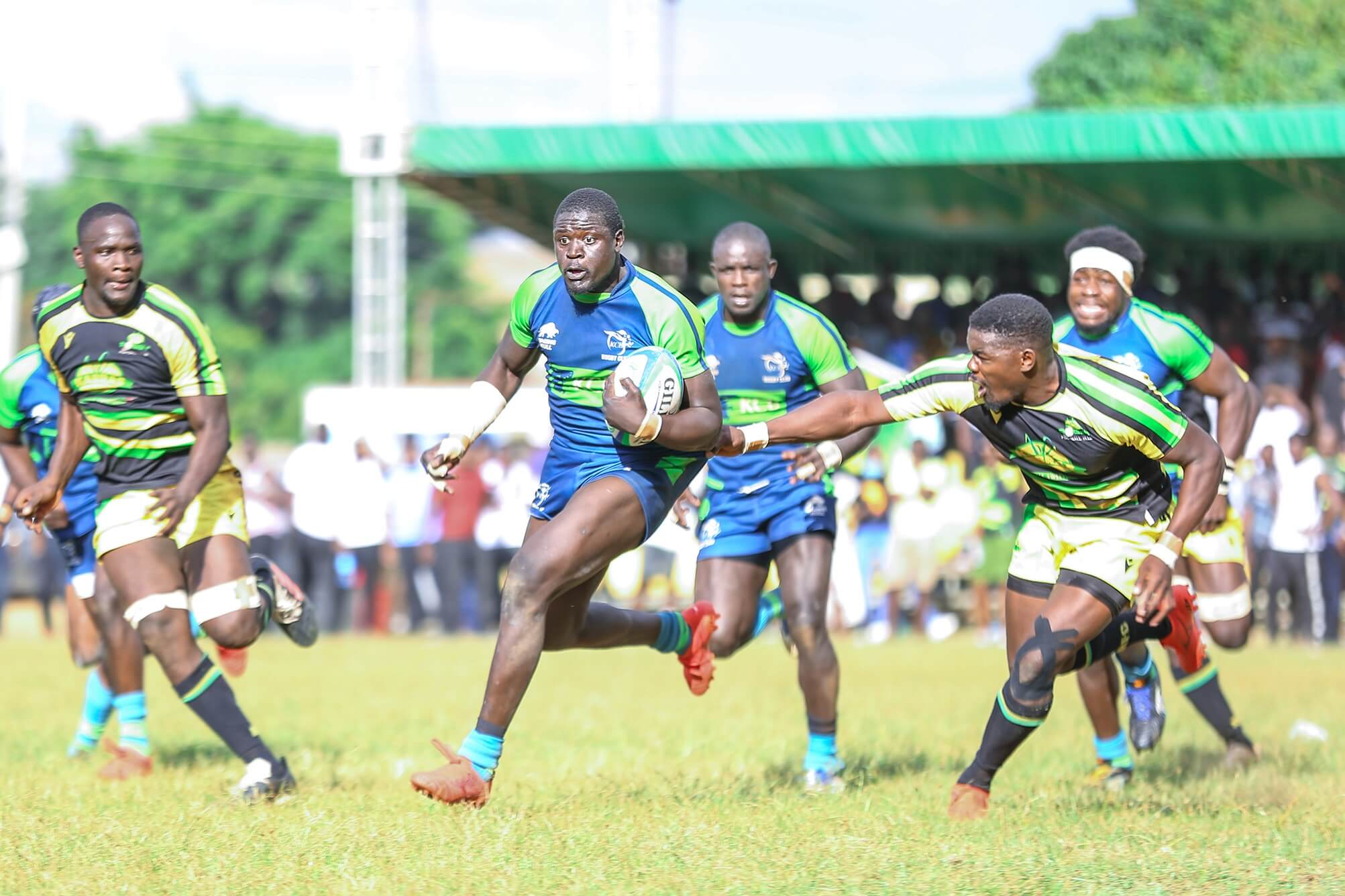
    Reigning champions Kabras Sugar kept their dream of hosting the Kenya Cup final alive after a hard-fought 20-14 victory over arch-rivals Menengai Oilers in a tense Rai Derby encounter.

    The Sugar Men rallied from 14-13 down at the break to tame inspired Oilers at the Nakuru Showground on Saturday.

    While the win kept Kabras in the hunt, eight-time champions KCB upheld their league table leadership heading into the final round of matches next weekend after humiliating Impala 64-14 at KCB Sports Club, Ruaraka on Friday.

    The Bankers sit top on 50 points including 10 bonus points as four times champions Kabras trail KCB on two points in second after failing to register bonus points in their last two wins.

    The two rugby giants will face off at the Kakamega Showground in an enticing clash to decide who finishes top in the regular season and gets to host the Kenya Cup final.

    Unbeaten Kabras has hosted the Kenya Cup finals since the 2017/18 season.

    Oilers, playing in front of their home fans, proved to be a formidable challenge.

    The hosts started on the front foot, with Samwel Mwaura crossing over for an unconverted try to give Oilers a 5-0 lead. Timothy Omela then added a penalty to stretch the advantage to 8-0.

    Kabras responded through South African playmaker Ntabeni Dukisa, who slotted in a penalty to cut the deficit to 8-5. The visitors then found their rhythm as Kenya Sevens scrum-half Brian Tanga, fresh from international duty at the Vancouver Sevens, made an instant impact with a brilliant try.

    Dukisa added the extras, handing Kabras a 10-8 lead. However, Oilers hit back, with Omela reclaiming the lead through another penalty to make it 11-10 before stretching the gap further to 14-10 with his third successful kick.

    Dukisa ensured Kabras stayed within touching distance by responding with a penalty just before halftime, leaving the visitors trailing by a single point at the break.

    The second half saw Kabras take control, with their experience and composure proving crucial. It was Dukisa once again who delivered the decisive blow, crossing over for a crucial try before converting his own effort to give the sugar men a 20-14 lead.

    Despite Oilers’ best efforts, Kabras held firm, defending resolutely to close out a crucial victory.

    KCB head coach Oliver Mang’eni was pleased with his side’s dominant display but emphasized the need to remain focused for the bigger challenges ahead.

    “For me, any game is won mentally and fitness wise. We have been struggling for some moment but there is a clear difference since my player are stronger, agile and faster now,” said Mang’eni.

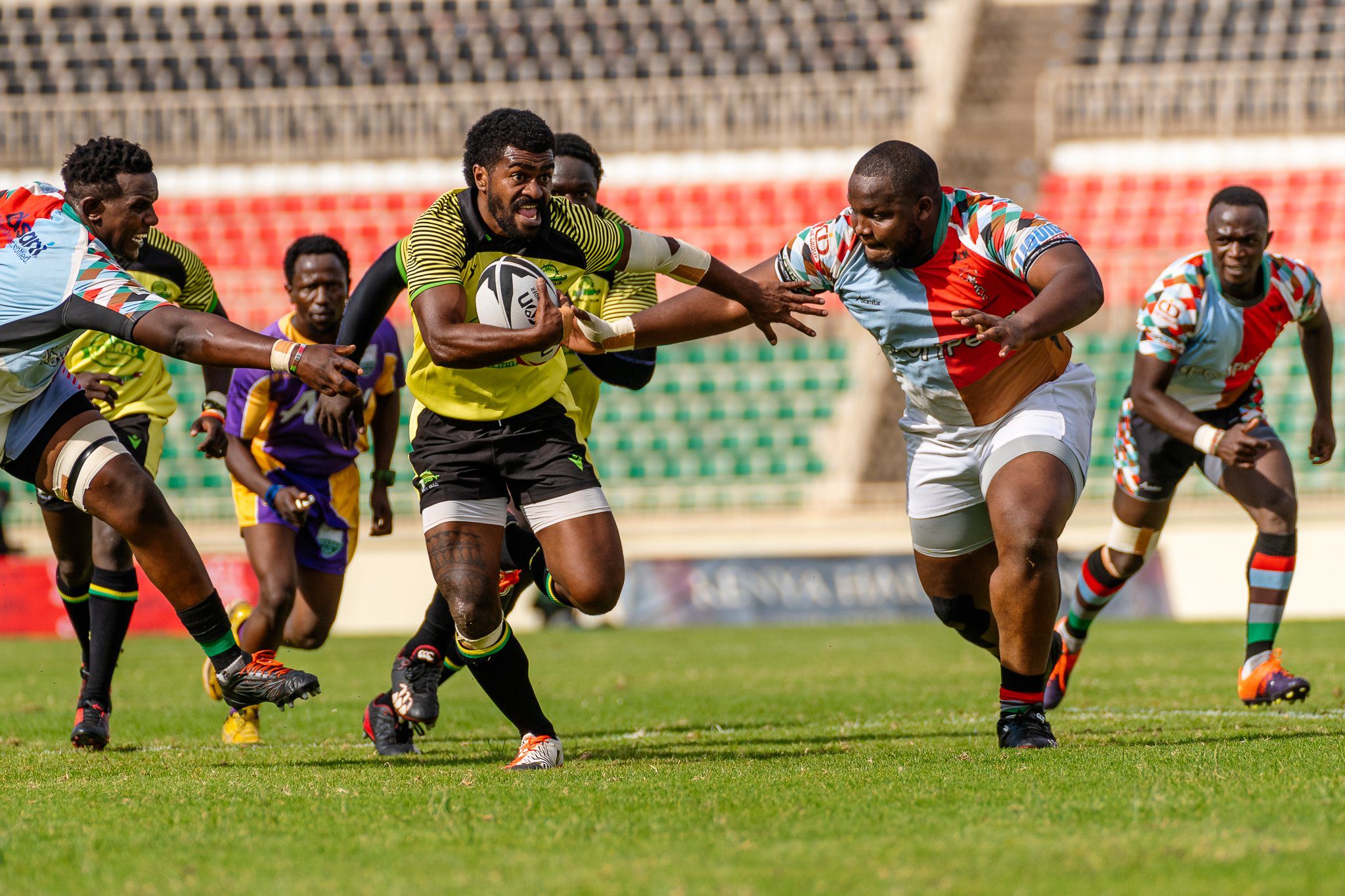
    Elsewhere, Nondies secured a 50-29 win over South Coast Pirates, while Nakuru edged Mwamba 32-27. Blak Blad prevailed 39-31 against Strathmore Leos, and Kenya Harlequin saw off Kisumu RFC 36-22.

  • Ethiopian duo of Takele and Kebede earn wins in Tokyo

    Ethiopian duo of Takele and Kebede earn wins in Tokyo

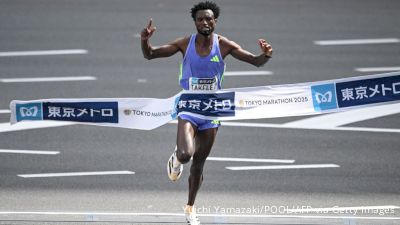
    The Tokyo Marathon opened the 2025 World Major Marathon season. On the men’s side, Tadese Takele won in 2:03:23, achieving a personal best time by one second and earning his first World Major Marathon win.

    Takele had set his previous personal best (2:03:24) during a third place finish at the 2023 Berlin Marathon.

    Fellow Ethiopian Deresa Geleta finished in second in 2:03:51 and Kenyan Vincent Kipkemoi Ngetich finished third in 2:04:00.

    Kenyan Titus Kipruto finished fourth in 2:05:34.

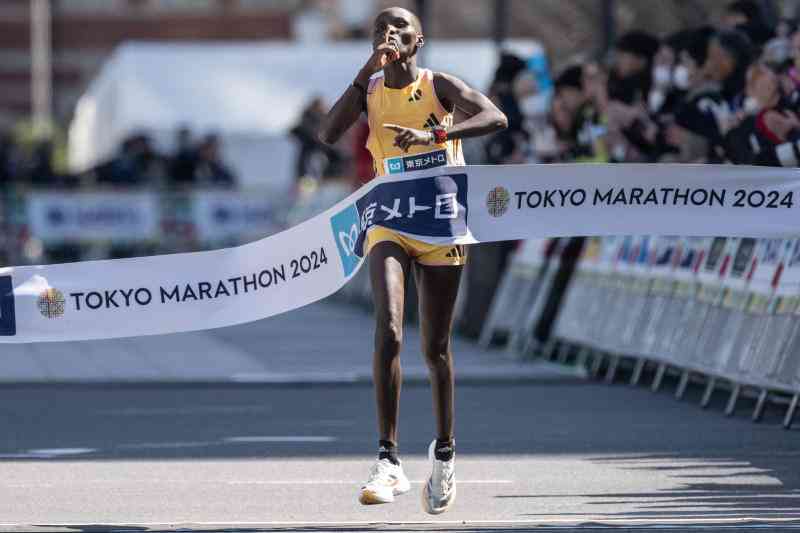
    On the women’s side, Ethiopian Sutume Asefa Kebede followed up her 2024 Tokyo Marathon victory with another first place title in 2025, running 2:16.31.

    Kenyan Winfridah Moraa Moseti finished in second in 2:16:46, and Ethiopian Hawi Feysa finished third in 2:17:00. Kenyan Magdalyne Masai was fourth in 2:19.28.

    Tokyo Marathon 2025 Men’s Top Ten Finishers

    1. Tadese Takele (ETH)- 2:03:23
    2. Deresa Geleta (ETH)- 2:03:51
    3. Vincent Kipkemoi Ngetich (KEN)- 2:04:00
    4. Titus Kipruto (KEN)- 2:05:34
    5. Mulugeta Asefa Uma (ETH)- 2:05:46
    6. Benson Kipruto (KEN)- 2:05:46
    7. Geoffrey Toroitich (KEN) – 2:05:46
    8. Suldan Hassan (SWE) – 2:05:57 (NR)
    9. Joshua Cheptegei (UGA) – 2:05:59
    10. Tubasa Ichiyama (JPN) – 2:06:00

    Tokyo Marathon 2025 Women’s Top Ten Finishers

    1. Sutume Asefa Kebede (ETH) – 2:16:31
    2. Winfridah Moraa Moseti (KEN) – 2:16:56
    3. Hawi Feysa (ETH) – 2:17:00
    4. Magdalyne Masai (KEN) – 2:19:28
    5. Rosemary Wanjiru (KEN) – 2:19:57
    6. Desi Jisa Mokonin (BRN) – 2:20:07
    7. Gotytom Gebreslase (ETH) – 2:20:25
    8. Deshun Zhang (CHN) – 2:20:53
    9. Jessica Stenson (AUS) – 2:22:56
    10. Yuka Ando (JPN) – 2:23:37
  • Kenya Cup: Focus on Rai Derby as Oilers, Kabras clash in Nakuru

    Kenya Cup: Focus on Rai Derby as Oilers, Kabras clash in Nakuru

    The Rai derby between Menengai Oilers and Kabras Sugar is set to be the highlight of this weekend’s Kenya Cup action as the battle for a home semi-final and potential hosting rights for the final intensify.

    With only two rounds left in the regular season, every point counts, and both sides will be eager to stake their claim as title contenders when they meet at the ASK Showground in Nakuru.

    Menengai Oilers, currently third with 41 points, are looking to keep their chances of finishing in the top two alive. A win over the defending champions would put them in a strong position to secure a home semi-final, a crucial advantage in the knockout stage. However, Kabras Sugar, who have won all nine of their matches this season, are determined to maintain their unbeaten record.

    Sitting just one point behind league leaders KCB with 44 points, they know that a win could see them reclaim the top spot, depending on the outcome of KCB’s match against Impala.

    The clash between Oilers and Kabras has become one of the fiercest rivalries in recent Kenya Cup history.

    Oilers will rely on their strong home form and the backing of their fans to push for a crucial victory, while Kabras, known for their dominance in set-pieces and expansive play, will be aiming to maintain their winning momentum as the play-offs approach.

    League leaders KCB will be looking to tighten their grip at the top when they host Impala at The Den. With 45 points and an unbeaten record, the bankers are in pole position to secure home advantage for the final, provided they keep winning.

    Their superior point difference of +360 has been key in keeping them ahead of Kabras, and they will be determined to maintain that advantage.

    Impala, on the other hand, are seventh with 15 points and have little to play for in terms of play-off qualification, but they could still pose a challenge.

    At the bottom of the table, Nakuru RFC and Mwamba are set for a crucial relegation battle at Nakuru Athletic Club. Nakuru, sitting 11th with nine points, are in a must-win situation if they are to avoid dropping to the second tier.

    Mwamba, just one point ahead in 10th place, are also in danger and cannot afford to lose this encounter. The stakes could not be higher, as the loser of this match could find themselves facing relegation alongside South Coast Pirates, who are currently last with eight points.

    South Coast Pirates face a tough away fixture against Nondies, who are fourth with 29 points and looking to strengthen their play-off position.

    A loss for Pirates would all but confirm their relegation unless other results go their way. Kenya Harlequin, currently fifth with 27 points, take on Kisumu RFC, who are ninth with 12 points.

    Quins will be aiming to secure their place in the play-offs, while Kisumu still have a slim chance of avoiding the drop.

    Meanwhile, KU Blak Blad, sixth with 21 points, will host eighth-placed Strathmore Leos in a mid-table clash that could have minor implications on the final standings.

    With the race for the play-offs and the battle for survival intensifying, this weekend’s fixtures are set to deliver thrilling action.

    The Rai derby between Kabras and Oilers will set the tone for what promises to be a decisive round in the Kenya Cup season.

  • Wanjiru ready to silence rivals as Kipruto seeks crown defence in Tokyo tomorrow

    Wanjiru ready to silence rivals as Kipruto seeks crown defence in Tokyo tomorrow

    The 2023 Tokyo Marathon champion Rosemary Wanjiru will be making another grand return to the streets of Tokyo, Japan for another scintillating marathon tomorrow full of confidence she claim comes from adequate training at her base in Iten.

    Wanjiru, who placed second last year and is the 2022 Berlin Marathon runner-up returns to a country where her athletics career was birthed.

    As she sets out to reclaim her 2023 title, Wanjiru said yesterday that she only hoped to run a good race in the first World Marathon Major of 2025.

    “When I start the race on Sunday, my prayer will be one; to run a good race and finish strong,” Wanjiru who landed in Tokyo earlier in the week said.

    The Iten-based long distance star said she draws her confidence for the Sunday race from months of training.

    “I am feeling great and ready for the race. My preparations were pretty good and that give me the confidence to do my best in this year’s race,” added Wanjiru.

    Last year, Ethiopian Sutume Asefa Kebede took the women’s crown while Benson Kipruto cruised to a stunning victory in the men’s marathon.

    Wanjiru says she was also well prepared to compete once again with the defending champion in the 42km race that observers say will be catfight.

    “I got a strong support from my coaches, family and management and I thank everyone for making the preparations possible,” the 2015 African Games 5000m silver medalist said.

    With her second place in the 2024 Tokyo Marathon, Wanjiru defeated big names among them Olympic champion Sifan Hassan of the Netherlands, who finished fourth in the contest.

    At the 2024 edition, the podium seemed decided at 30km, a mark where Wanjiru, Kebede and Amane Beriso crossed in 1:36:43.

    Beriso was later dropped, and Kebede managed to shake off Wanjiru and went for the victory over the closing kilometers.

    While a teenager, Wanjiru relocated to Japan where her athletics career was nurtured before she returned to Kenya to make waves.

    “Japan is my second home and competing at the Tokyo Marathon makes me feel great. I was here that my athletics journey started and it makes feel good whenever I return,” Wanjiru a 2:16:14 career best runner from Tokyo last year added.

    Wanjiru, 30, will be up against defending champion Sutume Kebede of Ethiopia who set a Japanese all-comers’ record of 2:15:55 when winning in Tokyo last year. Ethiopia’s Tigist Ketema, who ran 2:16:07 on her debut in Dubai just over a year ago, is another leading contender, along with her compatriots Hawi Feysa, who won in Frankfurt in October in 2:17:25, 2022 world champion Gotytom Gebreslase and 2021 London Marathon runner-up Degitu Azimeraw. Japan’s Ai Hosoda and Yuka Ando will join them on the start line.

    The women’s elite field features a total of nine sub-2:20 runners, including four who have dipped under 2:18.

    Last year, despite emerging second in Tokyo and rising to the sixth place in the world all-time list, Wanjiru could not make it to Paris Olympics. She was named in the initial Olympics squad but could not make the final list when the team was whittled down.

    In the men’s race, defending champion Benson Kipruto, who set a Japanese all-comers’ record when winning in Tokyo last year in 2:02:16, will be joined in the men’s race by Uganda’s Joshua Cheptegei, the world 5000m and 10,000m record-holder who returns to the roads to contest his second marathon after his 2:08:59 debut in Valencia in 2023.

    After winning in Tokyo, Kipruto became an Olympic bronze medalist as he ran 2:07:00 to finish third in Paris. Now he will aim to become the first man to win back-to-back Tokyo Marathon titles since Birhanu Legese in 2019 and 2020. Kipruto also won the Boston Marathon in 2021 and the Chicago Marathon in 2022, and was runner-up in Chicago in 2023.

    But Legese is also in action in Tokyo, and the 30-year-old has the chance to become the first three-time winner of the elite men’s race. The Ethiopian remains the ninth-fastest marathon runner in history with the PB of 2:02:48 he set in Berlin in 2019.

    The field features six sub-2:04 athletes, with Kipruto and Legese joined by Ethiopia’s Deresa Geleta, the Olympic fifth-place finisher and Valencia Marathon runner-up who has a best of 2:02:38, plus 2023 Berlin Marathon third-place finisher Tadese Takele, this year’s Xiamen Marathon winner Dawit Wolde and Kenya’s Vincent Kipkemoi Ngetich, who was third in Tokyo last year.

    The line-up also includes Ethiopia’s world bronze medalist Leul Gebresilase, Uganda’s Stephen Kissa and Japan’s Yohei Ikeda and Akira Akasaki

  • Kenya Special Olympics team intensifies preparations for 2025 World Winter Games

    Kenya Special Olympics team intensifies preparations for 2025 World Winter Games

    Kenya’s contingent for the 2025 Special Olympics World Winter Games has received a major boost as they ramp up preparations for the global competition set to take place in Turin, Italy, from 7-16 March, 2025.

    The team, which will compete in floorball, is eager to make a mark on the international stage as they join over 1,500 athletes from more than 100 countries in the prestigious event.

    The World Winter Games, being held for the first time since 2017, will take place in Italy’s Piedmont Region, bringing together athletes with intellectual disabilities in a showcase of skill, resilience, and sportsmanship.

    Kenya’s participation highlights the nation’s growing presence in winter sports and its commitment to promoting inclusivity in athletics.

    In a significant boost to their campaign, the team has secured a Kshs 1 million sponsorship to facilitate their training, travel, and logistics. The support is expected to play a crucial role in ensuring the athletes are well-equipped and ready to compete at the highest level.

    Speaking on the partnership, National Bank of Kenya (NBK) Managing Director George Odhiambo emphasized the role of sports in driving social change and fostering inclusivity.

    “Sports plays a powerful unifying role, and we are honored to support our athletes with intellectual disabilities as they prepare to represent Kenya on the global stage. This sponsorship underscores our belief in the power of sports to create opportunities for all,” said Odhiambo.

    The Special Olympics Kenya team is set to depart for Italy on March 6, 2025, and will compete across multiple sporting disciplines, with floorball being a key focus. Floorball, a dynamic indoor sport similar to ice hockey, is played with plastic sticks and a light ball.

    In the Special Olympics format, teams play three versus three on a smaller court measuring 20 meters by 12 meters, with goalkeepers actively guarding their nets without using sticks.

    Special Olympics Kenya Board Treasurer Ms. Mugadi expressed gratitude for the support, noting its significance in helping the athletes prepare adequately for the Games.

    “We are grateful for this sponsorship, which will go a long way in ensuring that our athletes are well-prepared to compete at the World Games level. This partnership is a testament to the power of collaboration in creating an inclusive society where athletes with intellectual disabilities can thrive,” she said.

    Special Olympics Kenya, part of the global Special Olympics movement operating in over 190 countries, has been instrumental in providing year-round sports training and competitions for children and adults with intellectual disabilities since its establishment in 1978.

    With this latest backing, Team Kenya is poised to make a strong showing at the 2025 Special Olympics World Winter Games, further cementing the country’s reputation in adaptive sports.

  • Kenya Lionesses kick-off World Seven Series qualification this weekend in South Africa

    Kenya Lionesses kick-off World Seven Series qualification this weekend in South Africa

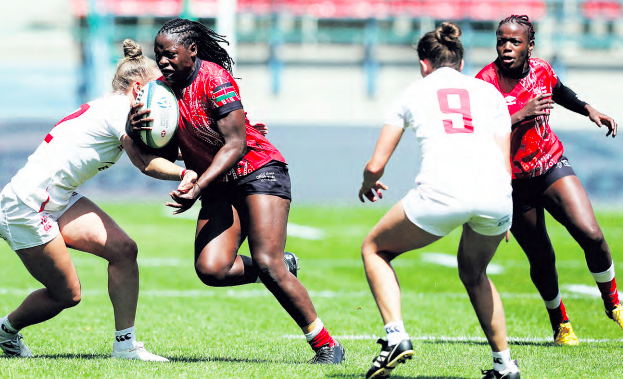
    Kenya Lionesses start their quest for qualification to the World Sevens Series this weekend with the opening tournament at the Athlone Stadium in Cape Town, South Africa.

    Last season, Dennis Mwanja’s charges missed out on the top four final shoot-out in Madrid after finishing fifth and the coach admitted they have learnt their lessons from the event. Poland clinched the fourth slot and went on to the final shootout in Madrid.

    The Lionesses had an intense three-month training phase coupled with playing build-up matches against Poland at the RFUEA Ground last month.

    The team arrived in Cape Town on Tuesday and has acclimatized to the hot and sunny conditions in the mother city.

    The Lionesses open their campaign against Samoa on Saturday at 12:38 pm and Mwanja expects a competitive contest from the Pacific Islanders.

    “They are a very physical side. We have done our video analysis on them and there are areas we know we can capitalize on to enable us to win the match,” said Mwanja who doubles as the  KCB Rugby coach.

    The Lionesses will then face Poland at 7:30pm in their second match. The two sides have met twice in the last 12 months with Poland beating the Lionesses 21-10 in Krakow in the final Challenger Sevens Series last year and Mwanja’s charges exacting revenge during the friendly build-up last month, which they won 19-12 at the RFUEA ground.

    The tactician said he also expects a competitive contest against the European side: “We know each other very well and from the match we played recently, there are areas which I believe we can exploit and get a victory.”

    Mwanja said the team needed to start the tournament well.

    “There is no margin for error. It’s vital we accumulate as many points as possible this weekend to give us a good foundation for the remainder of the series,” he said.

    Mwanja lauded the partnership the side has with MPESA, observing it will go a long way in benefitting the team.

    “We are delighted with the sponsorship deal with Safaricom. It will help the players’ welfare and I believe the players can now concentrate on the task at hand to qualify for the World Series,” noted Mwanja.

    The second leg of the Challenger Sevens Series will be held at the same venue on 7-8 March.

    Following the second leg, the top-ranked eight men’s and women’s teams will progress to the third and final tournament at the Henryk Reyman’s Municipal Stadium in Krakow on 11-12 April.

    The four men’s and women’s teams with the most cumulative points gained across the three Challenger rounds will then qualify for the HSBC Sevens Play-Off in Los Angeles on 3-4 May.