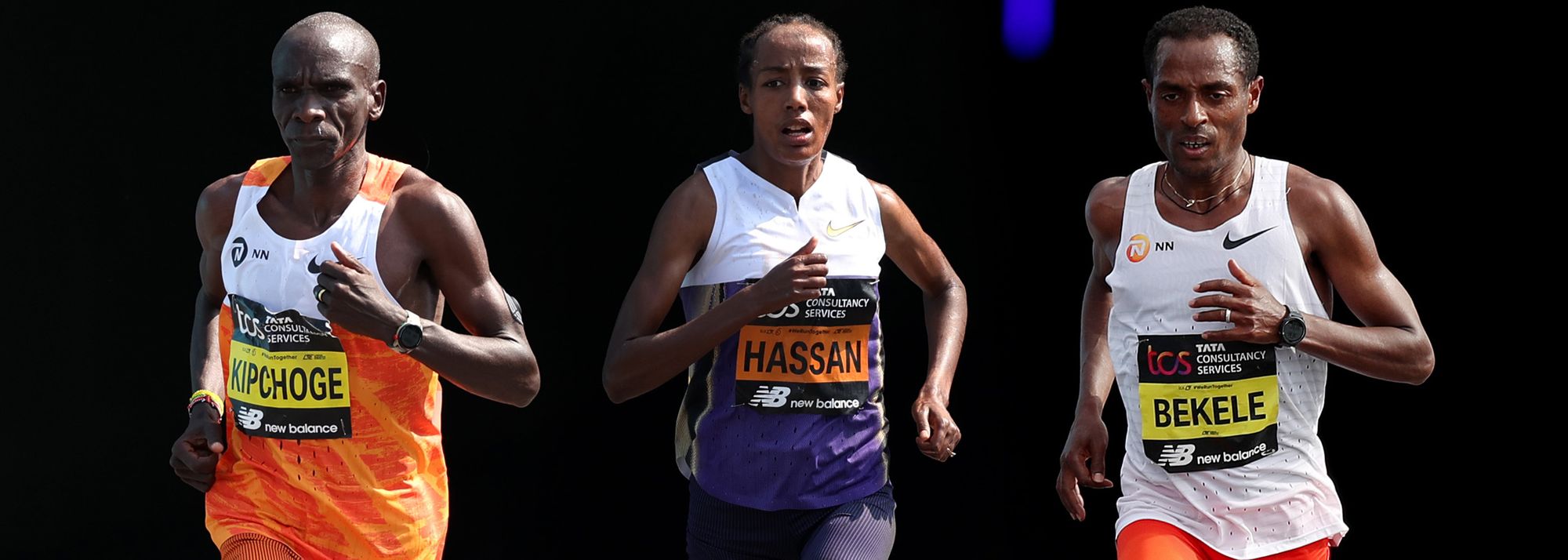
The 2025 TCS New York City Marathon – a World Athletics Platinum Label road race – will welcome one of the deepest and most star-studded fields in its history this coming Sunday, with global champions, record-breakers and former winners assembling to contest the prestigious five-borough challenge.
Olympic champion Sifan Hassan headlines a women’s field rich in quality and depth. The Dutch runner – who won the Sydney Marathon at the end of August in a course record of 2:18:22 – has already proven her versatility across distances, and her marathon best of 2:13:44, set in Chicago last year, makes her the fastest woman ever to line up in New York.
The course record of 2:22:31, set by Margaret Okayo back in 2003, has surprisingly stood the test of time, but Hassan has the speed and potential to challenge it, should she so desire. If she succeeds in doing so, she’ll become the first European winner of the women’s race since Paula Radcliffe’s triumph in 2008.
While she has yet to face the unique rhythm and unpredictability of the city’s bridges and hills, Hassan’s aggressive racing style and ability to accelerate under pressure mark her as the athlete to beat.
But the past three winners of the New York City Marathon – all of whom know precisely how to navigate this course – will also be on the start line.
Kenya’s Sheila Chepkirui returns in search of a repeat victory after her composed and controlled run last year. Her compatriot Hellen Obiri, who triumphed in 2023, remains one of the most tactically astute racers in the field, capable of matching any surge in the latter stages. Sharon Lokedi, the 2022 champion, also lines up with a proven record on these streets, her smooth, efficient stride perfectly suited to the race’s rolling terrain.
The last time an Ethiopian woman won in New York was back in 2011, but Gotytom Gebreslase, the 2022 world champion and a 2:18:11 performer, brings championship poise and a history of rising to the big occasion.
Vivian Cheruiyot, the 2018 London Marathon champion and 2016 Olympic 5000m gold medalist, adds another layer of prestige to the field, while Great Britain’s Eilish McColgan, Ireland’s Fionnuala McCormack and Kenya’s 45-year-old Edna Kiplagat bring experience and durability.
The men’s field is similarly loaded, featuring a rare convergence of marathon royalty.
Eliud Kipchoge, the two-time Olympic champion and former world record-holder at 2:01:09, makes his long-anticipated New York debut. The Kenyan great has conquered most of the world’s major marathons, but the city’s demanding course remains one of the few missing pieces in his extraordinary resume.
A victory here would not only complete his collection of major titles but further solidify his legacy as the sport’s defining figure of the modern era.
The 40-year-old would dearly love to add New York to his list of marathon major victories, but it’s been more than two years since he last won at the classic distance. In his past four marathon appearances, his best performance has been his 2:05:25 sixth-place finish in London earlier this year.
Kenenisa Bekele, the third-fastest man in history and a legend in his own right, continues his career-long rivalry with Kipchoge. The Ethiopian, who clocked his 2:01:41 PB in Berlin in 2019, has shown flashes of brilliance in recent years, displaying racing intelligence and closing speed. The 43-year-old hasn’t competed in 2025, but last year he placed second in London in 2:04:15.
Beyond those two icons, the field is brimming with talent capable of springing an upset. Kenya’s Olympic bronze medalist Benson Kipruto, a 2:02:16 performer and winner in Tokyo (2024), Chicago (2022) and Boston (2021), arrives as one of the most consistent racers on the major circuit.
Compatriot Alexander Mutiso, with a best of 2:03:11, offers formidable speed, while defending champion Abdi Nageeye of the Netherlands returns to protect his crown. Nageeye’s mastery of the New York course and his ability to handle surges in the closing miles make him a significant threat.
Albert Korir, the 2021 New York champion, also returns, hoping to draw on his familiarity with the course and his proven strength over its final climbs through Central Park.
After two years outside Spain’s top flight, Elche sealed their automatic return to La Liga with a thumping 4-0 win at Deportivo in June.
As the third largest city in the Comunidad Valenciana and the 20th largest in the whole of Spain, Elche could hardly be classified as one of those clubs pundits like to describe as “punching above their weight”.
That did not stop most pundits from granting them the dubious distinction of being – along with Real Oviedo – favourites to drop straight back into the second tier.
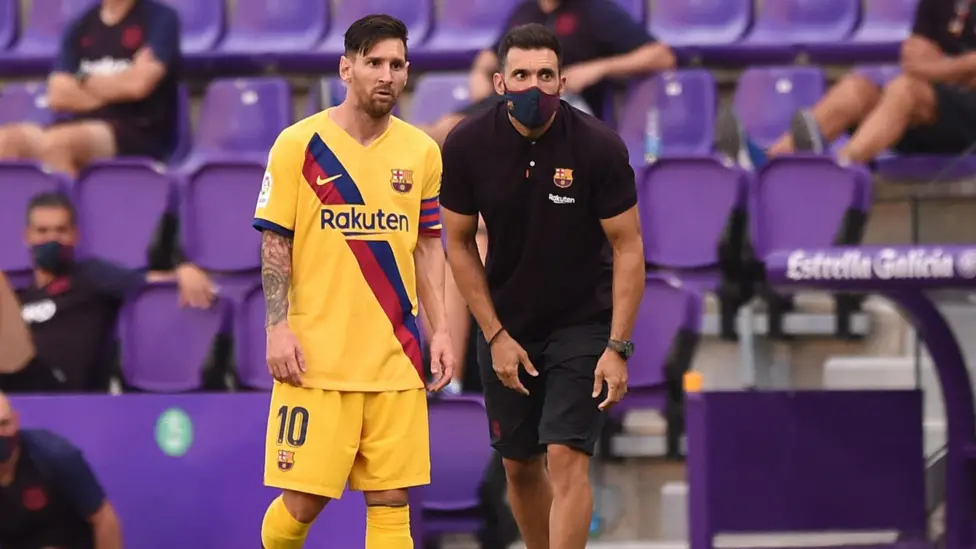
So far – so wrong. With more than a quarter of the season played, Eder Sarabia’s side go into Sunday’s game at Barcelona eighth in La Liga after 10 games – with three wins, five draws and just two defeats.
It will be a poignant occasion for the Bilbao-born coach, who returns to the Catalan club for the first time since an eventful seven-and-a-half month stint as assistant to Quique Setien in 2020.
I met with Sarabia to talk about his indifferent playing career, his famous father and his return to La Liga.
What do we know about Eder Sarabia?
They say the apple never falls far from the tree, although in the case of Eder Sarabia the skills he inherited were different to those possessed by his father Manu.
Manu is a legend at his beloved Athletic Club after winning back to-back titles between 1982 and 1984, including a league and cup double in 1983-84.
Eder never came close to matching his father’s footballing prowess a player and did not play any higher than the third division – although not for a lack of trying.
“I thought I was going to be a footballer, but it didn’t work out,” he says. “I ended up as an amateur – I started coaching and felt fulfilled from the start. I’ve kept going in that direction and I’m very happy.
“My parents were afraid that not fulfilling that dream would traumatise me, but they were relieved to see that coaching suited me.”
However, it was not all plain sailing when it became clear he was not going to reach the playing heights achieved by his father.
For that he has his mother to thank – who persuaded him to study engineering when perhaps a course in physical education might have seemed more logical.
“We lacked for nothing but when I wanted to buy a car I had to work hard before I could buy it,” he says.
“When I wanted to do a master’s degree after I finished engineering my parents told me to get a job.”
It led to him working in a Bilbao supermarket, first as a shelf stacker and then in charge of the fruit counter.
Looking back on those times, he says: “It’s all about valuing things, knowing what they really cost, and learning from what happens to you in life.”
How did he get to Elche?
Sarabia brought the curtain down on his playing career aged just 24, knowing deep down he could not reach the heights he had hoped to.
Instead, he began to teach youngsters at Cruces, before heading to the youth section of Danok Bat – one of the Basque country’s main feeder clubs that helps develop players for the region’s senior sides.
In 2011, Sarabia moved to Villarreal, and after stints with various youth sides, he was named as manager of their C team in October 2013.
Crucial to his development was his meeting with Setien – the man he would spend the next five years working with and who had played alongside Sarabia senior at Logrones.
The effect Setien had on the younger Sarabia was profound.
“My father and Quique were my two footballing fathers,” he tells me.
“I met Quique when I was eight years old and he was probably my father’s best friend in football, so we were close for a long time.”
While at Villarreal he was in contact with Setien – who was coach at Lugo – making suggestions about how he could improve things.
Setien, in turn, had seen Sarabia’s Villarreal youth team play, liked what he saw and promised him a job whenever he left the Galician club.
True to his word, as Setien joined Las Palmas in October 2015 one of his first calls was to the then 34-year-old Sarabia, offering him the role of assistant.
When Setien received a call from Real Betis 17 months later – and again from Barcelona in January 2020 – Sarabia followed him on both occasions.
A ‘learning curve’ at Barca
It was at a Lionel Messi-led Barcelona where Sarabia discovered in no uncertain terms what it would feel like to be outside of his comfort zone.
Cited by the media as the main reason for a rift between the dressing room and the coaching staff at the club, highlighted during a match against Celta Vigo when Messi was seen to openly ignore him, he would later admit to an argument between squad and staff after the game.
These days however he has only positive things to say about his time with the Blaugrana – and Messi in particular.
He says of the Argentine genius: “Leo isn’t just the best of all time – he’s probably the one who understands [football] best of all time. He understood things incredibly well.
“He’s a great winner. He’d get angry if you whistled something against his team in training or if they lost, and we had our ups and downs.
“But he wanted to be better and for the team to be better, for the common good and because he wanted to keep winning. He had the dream of winning another Champions League.”
Setien was sacked seven months after his arrival, and although Sarabia’s time at Barca was short, he looks back on it as a “learning curve”.
‘I want to leave a legacy’
After three seasons at Gerard Pique’s FC Andorra, Eder joined second-tier Elche on an initial one-year deal. The club won promotion back to La Liga after a two-year hiatus, earning him a contract extension until June 2027.
Despite a recent blip that has seen his side lose two and draw one of their past three, Sarabia’s Elche side have shown their innovative, adaptive, attacking style should be more than enough to stay up.
The tendency of some promoted clubs is to set out defensively in survival mode rather than going for it. But that is not going to happen with Elche.
If they are to go straight back down – which at the moment seems improbable – they will at least go down swinging, playing their own brand of football, remaining true to Sarabia’s ethos: making fans happy.
He says: “We have a general idea and a model, but we never play the same way.”
Fundamental to his ideology is a non-negotiable demand that players should be honest in the way they compete.
He explains: “In Basque, there’s a word ‘jatorra’. There’s no exact translation, but it’s like being a good person, honest, doing it the right way.
“Not everything goes as long as you win. That’s a hallmark and something my father instilled in me – football is for clever people, but not for cheats.”
Sarabia believes football should be about more than just results, wins, or dealings in the transfer market – and focus instead on the wellbeing of a club.
“I think about the club’s growth in the short and long term,” he says.
“If I stay for life, great, but if it’s six months or three years I want to leave a legacy so the club continues to grow and improve.”
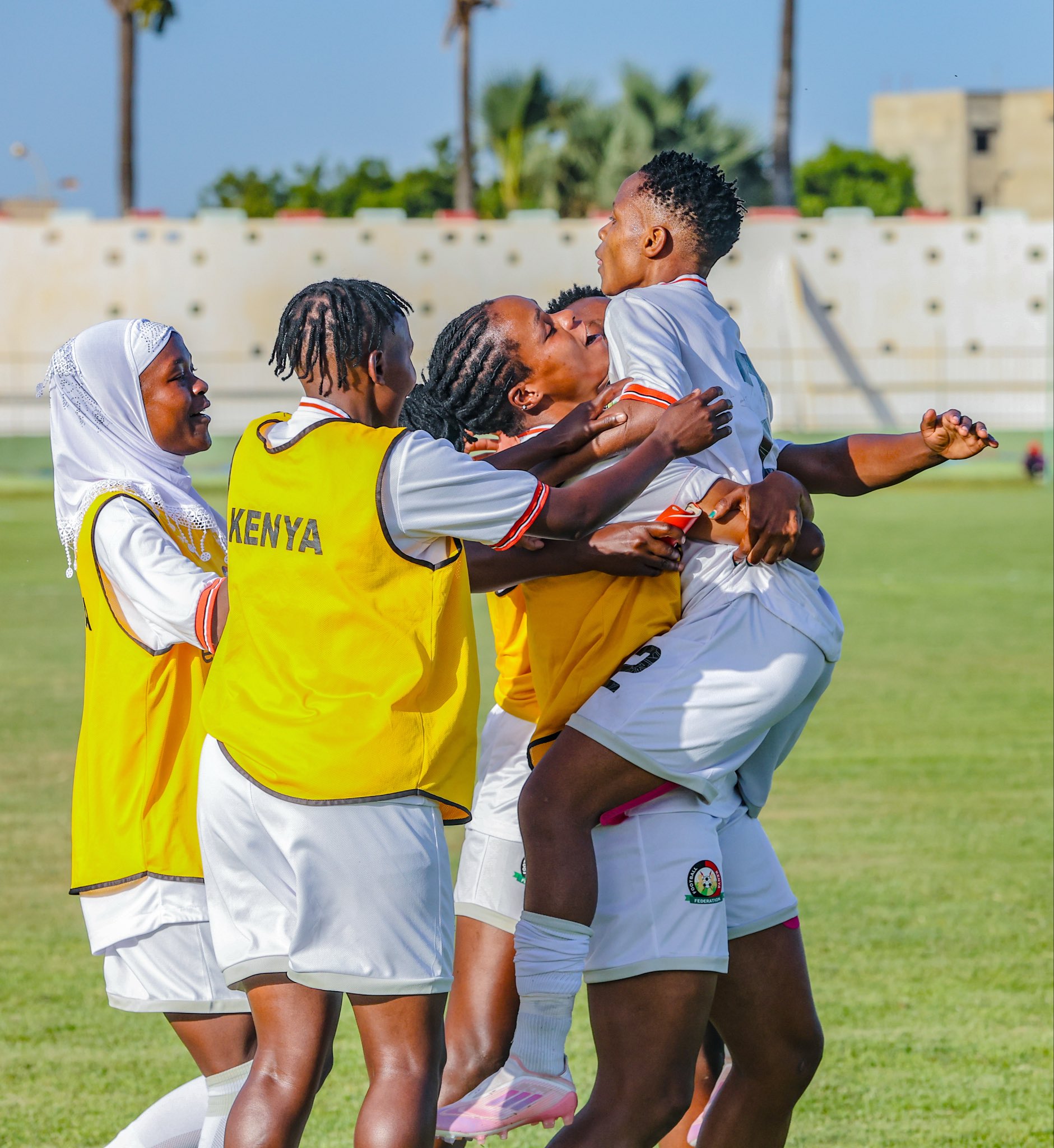
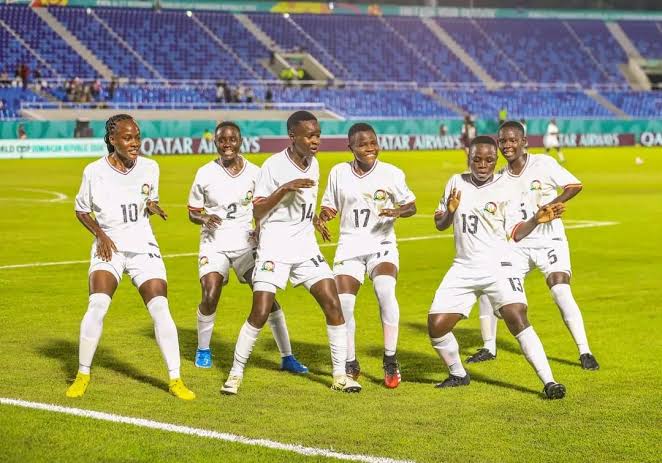
Harambee Starlets have booked their place at the 2026 Women’s Africa Cup on Nations (WAFCON) after securing a -1 aggregate win against The Gambia. Starlets stunned Gambia 1-0 in the second leg of the qualifying fixture played on Tuesday at Stade Lat Dior in Thies, Senegal, as The Gambia lack a CAF-approved stadium.
The Beldine Odemba charges built on the momentum of their first -leg success in Nairobi last week where they dominated their opponents with a three one dominant victory.
Kenya is among 12 nations have booked their places in Morocco after two qualifying rounds. The biennial women’s tournament is scheduled to run from 17 March to 3 April with the hosts Morocco, runners-up at the last two editions, looking to turn fervent home support into silverware.
The WAFCON will also serve as a qualifier for the 2027 FIFA Women’s World Cup in Brazil, with the top four teams earning automatic spots and two more advancing through intercontinental playoffs.
Nigeria’s Super Falcons have won the WAFCON title in 1998, 2000, 2002, 2004, 2006, 2010, 2014, 2016, and 2018, and are defending champions after their dramatic win over hosts Morocco in the last edition.
The first half was not highly contested as both team vying to dominate. The decisive moment came five minutes into the second half when Mwanalima Adam rose high to meet a floated pass from Elizabeth Wambui from midfield into the Gambian penalty box that caused confusion among defenders.
The win marked a return to the continental showpiece for Starlets since 2016 and having narrowly missed the chance in 2018, 2022 and 2024 editions. In 2016, Kenya qualified on away goals after drawing 3-3 on aggregate with Algeria. In that year Kenya luckily qualified for the second qualifying round after DRC withdrew from the qualifiers in the first round.
The win sees Harambee Starlets make a second appearance at WAFCON, and the players have earned Ksh1 million each from President William Ruto who had made the pledge if they won the second leg and qualified.
The Starlets are now guaranteed a minimum of Ksh16 million, the base prize awarded to teams that finish fourth in their group. This amount is part of CAF’s revised financial structure aimed at boosting investment in women’s football across the continent.
The prize money escalates significantly with each stage of progression. Reaching the quarter-finals would earn the team Ksh25.8 million, while a fourth-place finish overall would bring in Ksh38.7 million. A third-place result would secure Ksh45 million, and the runners-up are set to receive Ksh64.6 million.
The ultimate prize, winning the tournament, would see Kenya claim Ksh129 million, a figure that could transform the landscape of women’s football in the country.
These funds are paid directly to the Football Kenya Federation (FKF), which is expected to allocate them toward women’s football development. Use of funds is at the discretion of the federation.
Seven fixtures over the weekend marked round five of the 2025/26 Football Kenya Federation Premier League (FKFPL) season. Gor Mahia ended Posta Rangers’ unbeaten run, Tusker bagged their first one of the season while Mathare United stunned Shabana FC at their home.
Record Kenyan champions K’Ogalo at Nyayo Stadium thrashed Posta three nil with goals coming from Austin Odhiambo, Felix Oluoch and Ben Stanley Omondi- all coming in the second half. Gor moved to third on the table just one point adript joint league leaders Kakamega Homeboyz and Posta.
At Gusii Stadium, Shabana FC fell to a disappointing 0-1 defeat against Mathare. Their former player, Dennis Okoth, punished his old club with a rare first-half goal. This loss marks their second consecutive defeat at home, having also fallen 1-2 to Posta Rangers at the same venue. This extends their winless streak to three matches, following an earlier 1-1 draw with Tusker FC.
Elsewhere, AFC Leopards, Tusker and APS Bomet secured their first win of the season. Leopards, the 12-time-champions beat KCB 2-1 at the Ulinzi Sports Complex. Boniface Munyendo gave Leopards the lead just 60 seconds into the match. KCB’s Francis capitalized on defensive lapses to level the score, but Christopher Koloti managed to restore Ingwe’s lead and secure the win.
League newcomers APS Bomet came from a goal down to secure a historic first league win, beating Kariobangi Sharks 2-1 at Kasarani Annex on Saturday. Tusker finally managed to secure their first three points of the league, having gone four matches without a win. The Charles Okere-led side visited Murang’a SEAL at the SportPesa Arena on Sunday and narrowly escaped with a 1-0 victory.
While the drama unfolded on the pitch, another battle played out off it — at the entrance. Attendance numbers, ticket sales, and gate collections across various venues provided a revealing snapshot of each club’s pulling power and fan engagement.
From the packed stands at Gusii Stadium to the lively crowd at Nyayo, clubs raked in significant amounts from ticket sales, with some posting impressive figures despite mixed results.
Shabana fondly known as Tore Bobe despite their 1-0 loss to Mathare will find some consolation after raking in Ksh 1,197,000 from ticket sales. Tore Bobe faithfuls once again painted the Gusii stands red and white, creating a lively and passionate atmosphere, and highlighting the continued support for the team despite the disappointing result. Tickets for the fixture were priced at VVIP KSh 1,000, VIP KSh 500, and regular KSh 200.
The club took Twitter(now X) to thank supporters, stating:“We collected a gross revenue of 1,197,000/=. Not the result your support deserved, we promise to bounce back. It was great seeing the Stadium painted red and white 🔴⚪”
Gor Mahia, the 21-times Kenyan champions, walked home hundreds of thousands richer after their match against Posta. On top of the 3-0 win the club pocketed Kshs 902,900 from the sale of matchday tickets.
Club treasurer Gerphas Okuku, confirmed the figure while assuring fans that efforts are underway to improve match day operations.
“Kshs 902,900 was collected from ticket sales in our match against Posta Rangers. We thank our fans and encourage all to buy tickets to support the club. We promise to improve on the teething problems as we progress,” Okuku said in a statement.
However, the figure reflected a decline of Kshs 82,800 from their previous home fixture against Bidco United, where Gor collected Kshs 985,700. It also marked the latest instance in which the 21-time league champions failed to surpass the one million mark since embracing digital ticketing, a milestone last achieved on 2 June, during the Mashemeji Derby against AFC Leopards in Homabay, where they banked an impressive Kshs 2,152,750.
Elsewhere at Ulinzi Sports Complex, AFC Leopards fondly known as Ingwe collected Ksh421,000 from ticket sales during their 2-1 victory over KCB FC in a Kenyan Premier League match played on Saturday.
Over in Tunisia, on top of making history as the first Kenyan team to qualify for the CAF Confederations Cup group stage since Gor Mahia in 2018 and the first to do it in their debut season, Nairobi United have earned a total of Ksh58.1 million as part of CAF prize money, with Ksh6.4 million for qualifying for the preliminary round and an additional Ksh51.7 million for reaching the group stage.
The Nicholas Muyoti-led side edged out Tunisia’s Etoile du Sahel 7–6 in Sousse on penalties on Sunday evening after a 2–2 aggregate draw over the two legs. The Naibois had won the first league in Nairobi 2-0 but the Tunisians drew the tie winning 2-0 in regulation time sending the match into penalties. Goalkeeper Kevin Oduor saved two decisive spot kicks leading the club to the historic feat.
The money provides Nairobi United with a chance to invest in player development, infrastructure, and club operations, giving them the resources to compete at a higher level. Their group stage journey will pit them against African powerhouses like Zamalek SC, Al Masry, Kaizer Chiefs and Stade Malien, offering both prestige and exposure.
It has been a remarkable four months for the Kenyan Premier League side. The team earned promotion to the FKF Premier League after winning the National Super League, went ahead to win the FKF Cup by defeating Gor Mahia in the final to book a spot in the CAF Confederation Cup.
Kenya’s reputation as an athletics powerhouse soared to new heights in 2025, with its athletes shattering records across multiple disciplines. The Kenyan athletes dominated the world stages both in track and marathon events.
They demonstrated unparalleled excellence cementing the nation’s legacy in global sports.
Setting new records have become a normality in every season whenever Kenyan runners take to the track. And in 2025 the case was no different, Kenyan heroes delivered a spectacular season: world records, championship records, and sweeping domination across the women’s middle- and long-distance events.
The following athletes stood out for exceptional performances, making the year another one to remember for the nation.
Faith Kipyegon- The track queen
Faith Kipyegon (L) and Dorcas Ewoi celebrate after leading a Kenyan 1-2 in the 1,500m semifinals at the 2025 Tokyo World Championships/ Photo Team Kenya (x)
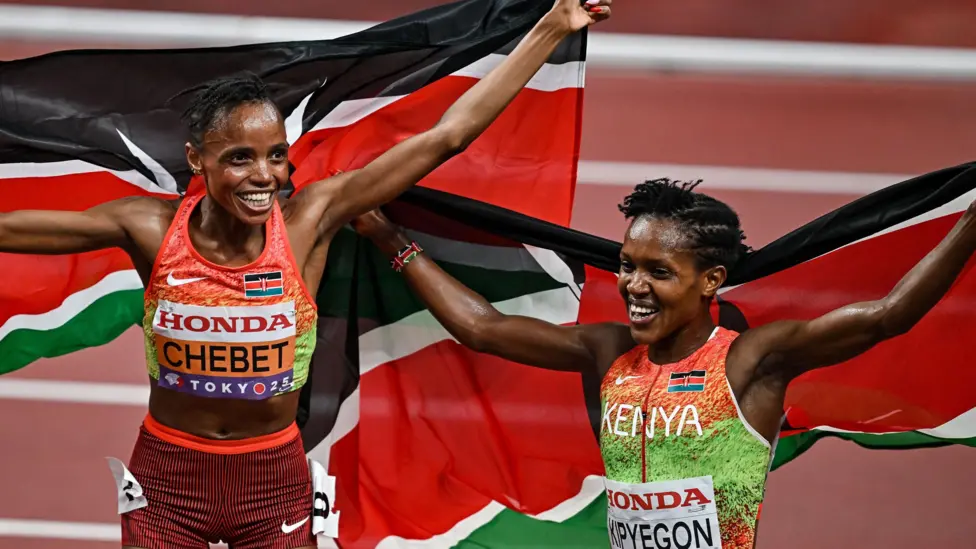
The year 2025 saw Faith Kipyegon solidify her status as the greatest female middle-distance athlete in the history of the sport with remarkable achievements.
The triple Olympic gold medalist re-entered the record books by breaking her own world 1500m record with 3:48.68 at the Prefontaine Classic (Eugene) in July improving her 2024 record by 0.36 seconds. A week earlier she had attempted to become the first women to run a sub-4 minutes mile but, falling short but setting a new world best of 4:06.42.
At the 2025 Tokyo World Championships, Kipyegon a mother of one (Alyn) stormed to a historic fourth world 1500m title and extended her streak of dominance in the event with a fifth consecutive global gold.
With her 3:52.15 winning time which was more than two seconds ahead of second-placed Dorcas Ewoi (3:54.92), the 31-year-old matched retired men’s world record holder Hicham El Guerrouj as the only other athlete in history to amass four 1500m titles at the championships (1997-2003).
Setting a world record in her signature event amid fierce competition, and then delivering when it counted at the World Championships, Kipyegon has earned herself a nomination for the 2025 Women’s Track Athlete of the Year by World Athletics.
Beatrice Chebet – The new long-distance star
Beatrice Chebet crosses the finish line to win the 10,000m race at the Tokyo World Championships. Photo Courtesy Track and Field Gazette (X)
Kenya’s golden girl Beatrice Chebet had a monumental 2025 season. She is becoming arguably one of the greatest in long-distance running history, which has deservedly earned her a spot on the nominee list of the World Athletics Female Track Athlete of the Year Award.
On 5 July in Eugene, USA, Chebet became the first woman to run under 14 minutes in the 5,000m race clocking 13:58.06, breaking Gudaf Tsegay’s 2023 record by two seconds.
In Tokyo, Chebet became only the third woman to complete the 5,000m-10,000m double at a World Championships after beating Kipyegon to the title in 14:54.36 continuing her unbeaten run in a 5000m or 10,000m race for two years, other than at the Kenyan national trials.
The 25-year-old, who emulated Ethiopia’s Tirunesh Dibaba (Helsinki 2005) and fellow Kenyan Vivian Cheruiyot (Daegu 2011), is also the reigning Olympic champion and world record holder in both events.
Agnes Jebet Ngetich – Road racing record breaker
In the road-racing domain, Agnes Jebet Ngetich stood out by breaking barriers and establishing new benchmarks.
On 26 April, in Germany at the “Adizero Road to Records” event, she ran 29:27 for a women-only 10 km race — breaking the previous world record of 30.01 held by the late Agnes Tirop from 2022.
By achieving this milestone, she became the first woman to break the 30-minute barrier in a dedicated women-only 10 km road race.
Lilian Odira – Surprise 800m champion
One of the most dramatic stories of the season was Lilian Odira’s unexpected gold in the women’s 800 m at the World Championships. At Tokyo she stunned a world-class field to claim the 800m crown in a Championship Record of 1:54.62, outkicking Olympic champion Keely Hodgkinson and defending champion Mary Moraa -who settled for seventh place – in one of the most dramatic finishes of the championships.
It was a personal best time by nearly two seconds, and afterwards the 26-year-old dedicated her gold medal to her two sons, who are four and two.
Her triumph helped Kenya become the first country in the history of the World Championships, and indeed global sports events, to sweep, in one edition, all the gold medals on offer in track races, from 800m to the marathon.
In the 3,000 m steeplechase, Faith Cherotich reminded the athletics world that Kenya remains the home of the steeplechase.
The 21-year-old contributed to the golden haul with a fearless performance in the 3,000m steeplechase, storming to victory in a Championship Record of 8:51.59 beating Winfred Yavi of Bahrain- the 2023 world champ and 2024 Olympic champ- by nearly five seconds.
This was ‘Little Faith’s’ first global gold after earning the bronze in 2023 and 2024. The championship record came despite the fact that race was run in warm and muggy conditions – 83 degrees, 76 dew point at start.
Emmanuel Wanyonyi – Men’s 800m star
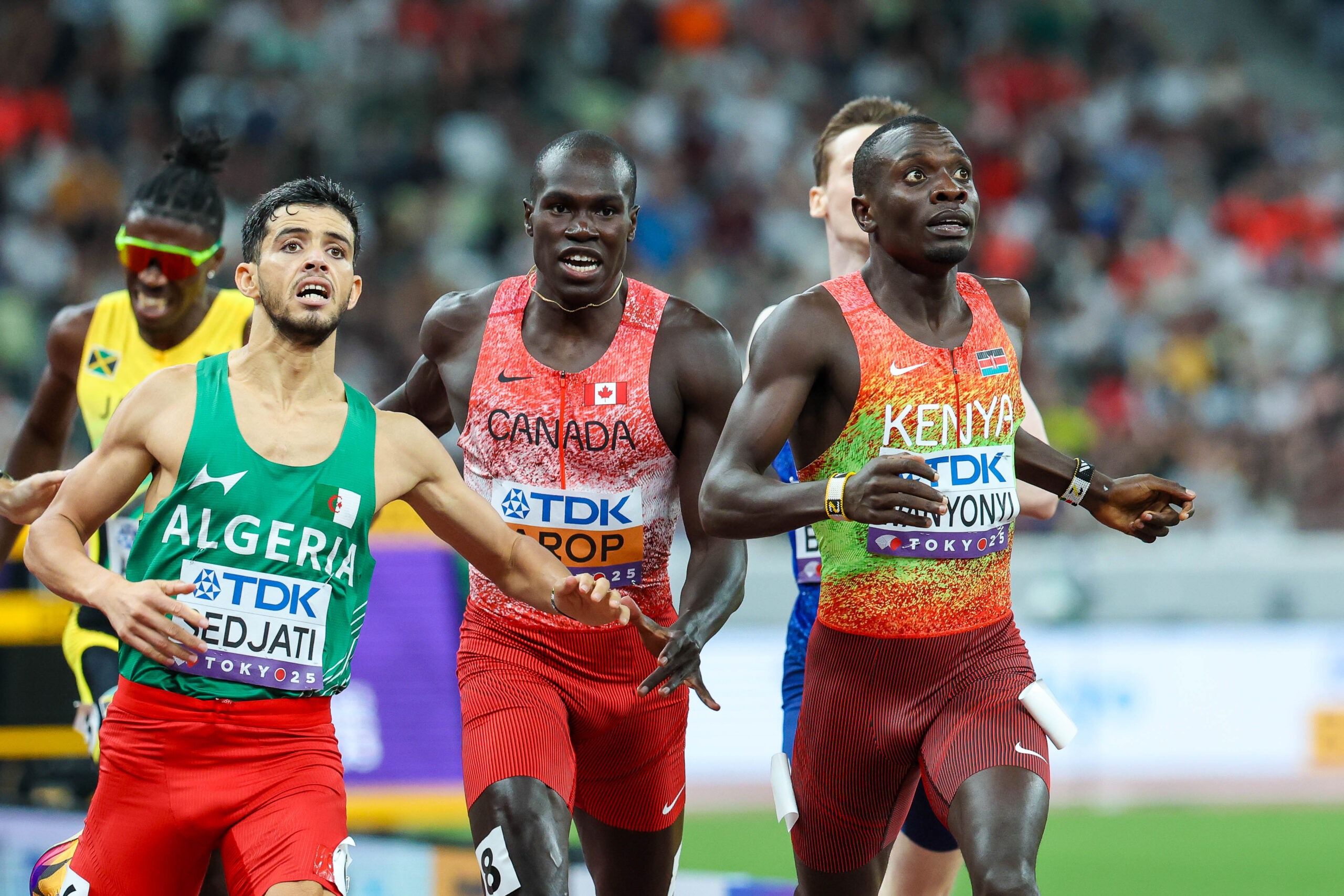
Kenya’s Emmanuel Wanyonyi battles off Marco Arop and Jamel Sedjati on his way to men’s 800m gold. Photo Courtesy/ AK/KELLY AYODI
On the men’s side, Emmanuel Wanyonyi stood head-and-shoulders as Kenya’s top global performer in 2025.
In Tokyo, Wanyonyi in a brave show led from gun to triumph in a Championship Record time of one minute and 41.86 seconds holding off the charging Sedjati Djamel of Algeria who settled for silver in a season best of 1:41.90.
Wanyonyi now joins Rudisha and Korir as the only athletes to hold both the World and Olympic 800m title concurrently.
His performance underscored Kenya’s resurgence in the 800 m, an event that has become increasingly competitive globally. Although Kenya dominated many women’s events, Wanyonyi was the sole Kenyan male gold-medalist in Tokyo — underscoring his exceptional output.
To top an exceptionally season, the 21-year-old has earned himself a a nomination for the 2025 Men’s Track Athlete of the Year by World Athletics.
Others who stood-out in the season with records are Ferdinand Omanyala who proved that Kenyan sprinters can also make headlines. At the 2025 Adidas Atlanta City Games he ran a 150m time of 14.70 s, setting an African record in that seldom-raced distance.
On the road marathon circuit, Kenyan excellence remained front and center — Sharon Lokedi delivered one of the standout performances. At the 2025 Boston Marathon she won the women’s title in 2:17:22, setting a new course record.
The 2025 season will be remembered for record breaking, depth and sweeps, versatility and big-stage delivery.
When Benni McCarthy was unveiled by the Football Kenya Federation (FKF) on 3 March 2025, optimism swept across the Kenyan football fraternity.
In his first press conference after signing a two-year deal, the former South African international vowed to take Harambee Stars to new heights.
The former Manchester United forwards coach said he had studied the talent in the country and he believed there’s “immense potential to compete at the highest level.”
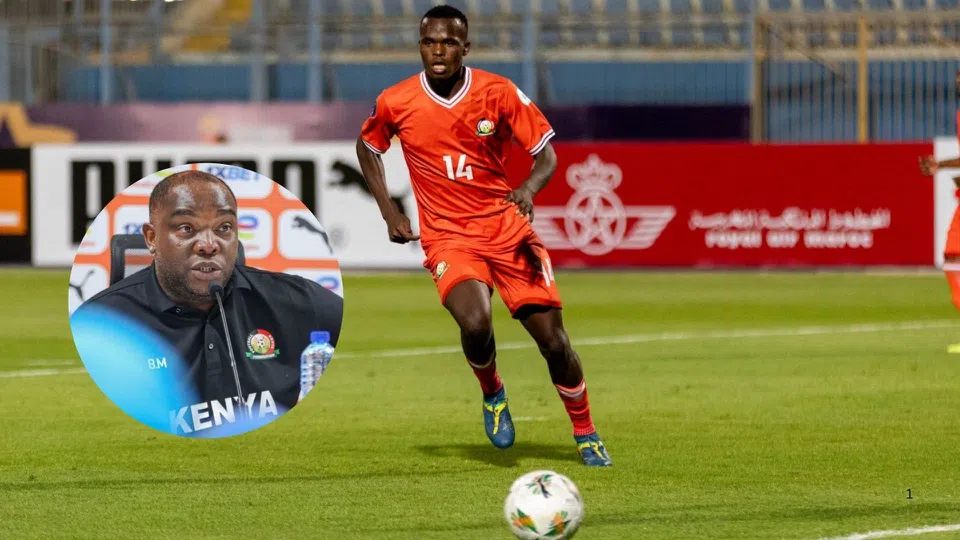
Now seven months and 12 days (to be specific) later, many Kenyans may say McCarthy was a gift from the gods. McCarthy who won the prestigious UEFA Champions league with Porto in 2004 under the ‘special one’ Jose Mourinho has guided Stars in 13 matches winning six, drawing three and losing four.
But it was the impressive performance at the 2024 Africa Nations Championships (CHAN) held in Kenya, Uganda and Tanzania in August that has earned McCarthy more praise and love from both the fans and the players. Kenya topped Group ‘A’ dubbed the ‘group of death’.
Kenya stunned Morocco and the DRC 1-0 before drawing 1-1 with Angola. Notably, Kenya had to play against African eventual champions, Morocco, with 10 men after Marvin Nabwire was sent off while Chrispine Erambo was also red-carded against Angola.
Kenya finished the group stage on 10 points one ahead of Morocco and booked her spot in the quarters against Madagascar where she lost 3-4 on penalties after the game ended 1-1 in regular time.
In the seven months he has been in charge, the former Cape Town City and Amazulu FC coach has rebuilT Kenya’s footballing identity around discipline, structure, and attacking flair. Stars have shown flashes of potential — but also reminders that rebuilding takes time.
Beyond his tactical acumen, McCarthy has shown that he is not afraid to take risks by making strings of changes in his squad also showing the he also has no favorites.
In his own words ‘I select players based on merit.’ “If you want to start the match, impress me in training sessions and during games,” said McCarthy ahead of the encounter against Angola in August.
In the dressing room he is considered a father figure with defender Dennis Sakari calling him ‘Baba’ (Dad). “We work and play for him. We know what he has achieved both as a coach and a player, so we trust what he says,” added Sakari.
Beyond tactics, McCarthy’s arrival has injected a winning mentality and professional discipline. Training sessions are reportedly more intense, with clear structures and tactical drills. Players often speak of McCarthy’s direct communication and emphasis on accountability.
There’s also renewed team spirit. Whether in victory or defeat, the squad projects unity — a stark contrast to previous years when internal divisions often spilled into the public eye.
Despite the thrilling performances at the CHAN, in World Cup qualifiers, Kenya’s results have been mixed. Wins against Burundi and Seychelles offered optimism, but a humbling defeats against Gambia and Cote D’Ivoire everyone how far the Stars still have to climb.
The standout player under McCarthy has been Ryan Wesley Ogam. The Wolfsberger AC striker was handed the national call up during the CHAN and he was so impressed with the call even when he was still not fit to play due to a knee injury that had sidelined him for three months.
The former Tusker forward has revealed that every national team camp presents an opportunity to improve his game and grow as a professional.
“It is a huge pleasure to don the national team colors. The jersey comes with its own weight of responsibility as we represent millions of Kenyans, so to me it is a great honour, and I am committed to giving my best every time I get the opportunity,” said Ogam who has netted six times in eight appearances.
McCarthy’s biggest contribution so far has been introducing a clear tactical identity. Kenya now lines up primarily in a 4-3-3, occasionally switching to a 4-2-3-1 when protecting a lead.
The new system emphasizes:
Vertical transitions: Quick breaks from defense to attack
Pressing: A higher defensive line and coordinated press, particularly in midfield
Structured buildup: Encouraging defenders to play out from the back, the modern day football
McCarthy has strongly criticized former coach Engin Firat and other sceptics who had claimed that Kenya lacks football talent, insisting that such opinions overlook the potential and skill present in the country’s players. Firat had said that Kenya is a country where people knew little about football and, as a result, did not show enough respect for the sport.
“Kenya is a country where they don’t know anything about football, so in that sense, they don’t respect it enough. We won against the Asian Championships in Qatar and no one cared,” Firat said, at the time.
However, Benni holds a very different view regarding football talent in Kenya, noting that Firat and others who doubted the country’s potential had underestimated the work involved. The Harambee Stars coach emphasized that he believes in giving players the freedom to make decisions on the pitch rather than micromanaging every action.
He explained that while he provides instructions and guidance, he does not feel the need to monitor every single move, allowing players to take ownership of their game.
“Whoever said that there was no talent was either smoking on something or they just didn’t do their job accordingly, because Kenya is full of talent,” McCarthy said in an interview shared by KBC journalist Caren Kibet on Instagram.
The South African top goal scorer has given the players the freedom to think for themselves, ” I do not to be micromanage players, telling them exactly what to do, how to do and when to do it.
“So, you give them the instructions, you guide them, and you let them go out and be players and search and find ways to be better from what you explained.”
Kenya ended its 2026 World Cup Qualifier campaign with a humbling 3-0 defeat in the hands of Cote D’Ivoire in Abidjan yesternight.
McCarthy’s men hardly had a foothold into the game and were lacking in all areas against a star-studded Ivory Coast team that should have won by a bigger margin had they taken most of their chances.
The Harambee Stars boss accepts that there was little his team would have done when playing such a top-quality team.
“The objective was to go out there and try and complicate for Ivory Coast national team because we are a professional team, we do not want to come here to lose the match but you have to give credit where it is due,” McCarthy said after the match.
With Kenya out of World Cup talks, McCarthy and his men will regroup and embark on a strategy aimed at an impressive performance at the 2027 Africa Cup of Nations.
As Kenyans celebrate their victory at the just-concluded World Athletics Championships in Tokyo, the country must also pause to reflect on a growing concern, the dwindling fortunes of the ‘boy-child’ in athletics. Kenya returned home with 11 medals; seven gold, two silver and two bronze, finishing second behind the USA’s dominant haul of 26 medals.
But beneath the celebrations lies a sobering reality. Of Kenya’s medalists in Tokyo, women carried the bulk of the glory, securing six golds and two silvers, while their male counterparts could only muster one gold and two bronzes.
But all is not lost.
When Emmanuel Wanyonyi crossed the finish line first in the men’s 800m at the 2025 Tokyo World Athletics Championships, pumping his fists and roaring with joy, it was more than just another gold medal for Kenya — it was a sigh of relief.
For the first time since Emmanuel Korir in 2022 at the Eugene World Championships, Kenya had a male 800m champion standing atop the podium. In a championship dominated by Kenyan women, Wanyonyi’s performance was a powerful reminder: the kings of Kenyan track might just be coming back.
A Glimmer in the Storm
The Tokyo 2025 Championships were tough for Kenya’s male athletes. Out of the seven gold medals Kenya took home, only one came from a man — Wanyonyi’s. The women swept everything else from 800m through marathon, leaving the men in a shadow of their own history.
For a nation that once ruled the 800m, 1500m, and the steeplechase, it felt like watching a giant trying to find its footing again. Wanyonyi’s victory, however, was a crucial reminder that the foundation isn’t gone — it just needs rebuilding.
The 21-year-old has been the only standout male athlete over the last three years winning a silver at the Budapest23 World Champs, an Olympic gold at Paris24 and the latest gold in Tokyo. Wanyonyi has shown maturity far beyond his age. His Tokyo win was not only about strength but race intelligence — the ability to pace, position, and close out perfectly. Traits that David Rudisha mastered a decade ago.
Since his senior debut at the worlds in Eugene 2022, Wanyonyi has made huge strides. It’s not just about amassing titles. Wanyonyi has also proven he can run very fast.
He achieved the second-fastest time in the 800m, 1:41.11, which is just 0.20 seconds shy of Rudisha’s world record.
“Running the fast time so soon after the Olympics was a surprise for me,” he recalled of his Lausanne race, where he closed in on Rudisha’s iconic 1:40.91 mark from London Olympics 2012.
From Rudisha to Wanyonyi: The Changing of the Guard
When Rudisha, Wanyonyi’s mentor broke the world record — running a near-perfect solo race — he redefined the event. For years, Kenya was unbeatable in the two-lap race. But since Rudisha’s injuries and retirement, the men’s 800m crown had slipped through Kenyan fingers until Korir won the delayed 2020 Tokyo Olympics held in 2021.
Wanyonyi’s gold in Tokyo wasn’t just a medal; it was closure for a country that was losing hope of dominating the two-lap race with competition coming from Canada’s Marco Arop and Algeria’s Djamel Sedjati.
“After Rudisha, it was like we were searching for identity,” said Barnaba Korir, Athletics Kenya’s performance director. “Now with Wanyonyi, Simon Koech, and Reynold Cheruiyot coming up, we’re seeing a generation that blends natural talent with modern preparation.”
Indeed, Wanyonyi trains under a new model that emphasizes recovery, pacing science, and tactical rehearsal — areas that Kenya’s older systems often overlooked. His camp in Kapsabet, guided by emerging coaches, uses GPS-based tracking and nutrition monitoring.
Wanyonyi now joins Rudisha and Korir as the only athletes to hold both the World and Olympic 800m title concurrently.
“Wanyonyi is now the second-fastest and it’s just a matter of time if he keeps on pushing and doing the right thing, good training,” said Rudisha on his mentee’s threatening his record that has stood for more the 13 years.
The Young Guns
Wanyonyi is not alone. A small but growing group of young male athletes is emerging, eager to reclaim Kenya’s dominance on the track.
Reynold Cheruiyot, the 2023 World u-20 champion and 2025 World Championships bronze medalist, is being touted as the future of the 1500m — a space once ruled by Timothy Cheruiyot and Asbel Kiprop.
KENYA’s Reynold Cheruiyot (C)scoops bronze in men’s 1500m at Tokyo World Champs; Portugal’s Nader wins gold, Briton Wightman takes silver. Photo Courtesy/SUPERSPORT
The 21 year-old claimed his bronze medal in a time of 3:34.25. The race was won by former Moroccan now trading for Portugal, Isaac Nader in a nail-biting finish in a time of 3:34.10.
Another emerging talent is Edmund Serem a steeplechase bronze medalist in Tokyo. Serem, 17, finished third with a time of 8:34.56. He followed New Zealand’s Geordie Beamish, who staged a dramatic sprint finish to snatch gold in 8:33.88, ending Soufiane El Bakkali’s reign of dominance as the Moroccan took silver in a closely contested race.
The 2024 World u-20 champion credited his success to the inspiration he received from his mentor and legendary marathon runner Eliud Kipchoge.
“I was anxious because of the massive crowd in the stadium, as well as running alongside the world beaters, but I maintained my composure. I drew my encouragement from my mentor,” said Serem the younger brother to Amos Serem– the 2021 world U20 champion.
World u-20 steeplechase champion Edmund Serem. Photo Courtesy/ World Athletics
Simon Koech, meanwhile, is also in the discussions to lead Kenya back to its glory days. He says the emerging crop of talent in the discipline fills him with hope that Kenya will roar once again.
“If you look at the new talents that are emerging such as Serem, you can tell that we will reclaim our dominance in the men’s 3000m steeplechase. They have spiced up the competition in the local scene with those of us who have been in the game for sometime. That can only increase the quality of athletes that go on to represent the country at international competitions,” the 2021 World u-20 bronze medalist.
Kenya has struggled in the water-jump-and-hurdles race in the past five years, having relinquished the Olympic title to Moroccan Soufiane El Bakkali. Bakkali has gone on to become a thorn in the flesh of Kenya, maintaining a tight grip on a race that has been a preserve of the East Africans since Amos Biwott won gold at the 1968 Olympics in Mexico City.
“These young men are learning from the women,” noted coach Bernard Ouma, speaking during a post-championship analysis show on NTV. “They’ve seen how Faith [Kipyegon] and Mary Moraa train — the discipline, the structure, the professionalism. They’re beginning to apply that.”
Learning from the Queens
There’s no denying it: Kenyan women are currently setting the standard. Wanyonyi and his peers have openly admitted that watching Faith Kipyegon, Beatrice Chebet, and Peres Jepchirchir dominate the global stage has been a source of motivation.
“If you look at how Faith prepares, you realize success is not just talent,” Wanyonyi said in an interview with BBC Sport Africa after Tokyo. “She trains like a machine, she plans her season perfectly, and she never loses focus. That’s what I’m trying to learn.”
Sports analyst Martin Keino, son of Kipchoge Keino, believes this cross-gender inspiration is healthy.
“Kenya’s women have raised the bar. The men now know they can’t just rely on history. Wanyonyi’s win shows the boys are watching — and catching up,” he said during a KBC Sports Review segment.
The Road Ahead
For Kenya’s men, the challenge is clear — rebuild the track empire one step at a time. The 2026 Commonwealth Games and the 2027 World Championships offer the perfect stages.
Wanyonyi’s Tokyo gold, Cheruiyot’s and Serem’s (bronze) may have been a light in a dark tunnel, but it could mark the beginning of Kenya’s men’s renaissance.
In many ways, Wanyonyi’s rise mirrors Kenya’s athletic story — humble beginnings, explosive talent, and a relentless belief in redemption.
As Rudisha himself tweeted after the Tokyo final: “A new champion, same spirit. Kenya’s men are back.”
For now, Kenya’s women may hold the crown, but the men are gathering their forces again. And if Wanyonyi’s confident smile and golden finish are anything to go by — the kings are not gone. They’re simply preparing for a royal comeback.
The way forward
The allure of more money in road running is pricing away athletes at a tender age, posing the greatest threat to the East African powerhouse in losing its dominance in men’s races on the track. As veteran coach Julius Kirwa suggest, Kenya must address the issue of young male runners going to the road: “It is very difficult for an athlete to compete well at the track after going to the road. We are trying to address this problem with the Federation and we are talking to young athletes from the grassroots, just to ensure they understand the progression of going to the road.”
Secondly, we must be patient and nurture the new crop of runners and also use these young athletes and the legendary ones to motivate the hopefuls.
For example, Wanyonyi is never ashamed to talk about his late start in running start or previous personal struggles: “I know I motivate so many people because when they look at where I was and where I am now, they know anything is possible,” he reflected in an exclusive interview with Olympics.com.
Former javelin world champion Julius Yego, who captained the Tokyo squad, believes men’s disciplines are in transition. “We left it too late, and to get back on track will take time,” he said pointing to the collapse of the steeplechase dynasty, once Kenya’s fortress.
“We over-relied on the likes of Kemboi, Brimin Kipruto, and Paul Kipsiele and forgot to groom replacements,” he admitted.
Still, he insisted Edmund Serem’s bronze was a breakthrough to build on: “It is a good start. We should take advantage and build a team around Edmund.”
But Yego also challenged male athletes to take responsibility saying ‘most lack patience’. For him, success comes from sacrifice and resilience, not shortcuts.
“When things don’t work, they jump off. I’ve been around since 2007, and it hasn’t been smooth. Between 2007 and 2010, it was very difficult, but I soldiered on,” he said.
Thirdly, Kenyans should not turn the current crisis into a gender war. In Beijing 2015, Kenya won seven golds, and five were men’s. Nobody complained then. Now that the women are shining, we must not blame the boy-child but work to lift him. Kenyans should be part of the solution by applauding the wins and the positives rather than criticizing everything.
Lastly, the federation should organize more invitational meets for sprinters where the athletes can measure themselves against continental sprinting powerhouses. Ferdinand Omanyala has lit the spirit of sprinting and more young males want to run in the short races.
National sprints’ coach Stephen Mwaniki stresses the urgent need to sharpen the country’s sprinters through greater exposure and longer training camps to build team chemistry.
“We need more exposure for our sprinters so they can learn to compete and excel on the big stage. Competing against countries like Botswana and South Africa in invitational events will give us the edge we currently lack,” Mwaniki explained.
He also emphasized the importance of longer, structured training camps to sharpen technical areas, especially in relays.
With nothing left to play for but pride, Burundi and Kenya will face off at Intwari Stadium, Burundi on Thursday in matchday nine of the 2026 FIFA World Cup qualifiers.
Both teams are already out of the running for a place at the finals, with the hosts sitting fourth on 10 points from three wins, a draw and four losses while the visitors, in fifth from two wins, and three draws and losses apiece.
Harambee Stars contingent flied out of the country for Bujumbura on Tuesday to face the Swallows before heading to Abidjan for a date with Cote D’Ivoire’s Elephants on Tuesday next week. The Elephants to Group ‘F’ on 20 points from eight matches and have to beat Stars to automatically qualify for the quadrennial showpiece to be hosted by Canada, Mexico and the United States. Gabon follow closely on 19 points.
Stars head coach Benny McCarthy called 24 players for the two matches and this international break offers a rare but crucial opportunity to young footballers to prove themselves. One such who has earned a call-up is Lawrence Okoth who is attached to Finnish side SJK Seinajoki.
Okoth is a product of the Michael Olunga Football Academy (MOFA) and made history earlier this year as the first Kenyan to score at the u-20 Africa Cup of Nations in Egypt, where he netted a memorable header against Morocco and added a second to his name in the tournament.
McCarthy says he waited for the perfect moment to call him up as the upcoming matches do not have much pressure which allows the young player to be eased into the team: “Now that we are out of qualifying range, I can give opportunities to young players. I hope Okoth appreciates this opportunity and grab it with both hands.”
The South African talisman added that the 19-year-old forward could have earned an early call-up were it no for “the available experienced Jonah Ayunga and Masoud Juma.”
McCarthy is aware injuries are bound to happen and says this provides an opportunity for the rookies to prove themselves.
“I saw him play in the AFCON u-20, and this is an opportunity to rope in young players and give them a taste of international football. “When he gets it in one of the matches, then he must take it with both hands because 2027 is around the corner and we are building for AFCON,” added McCarthy who took over the reigns of Stars in March 2025.
Stars captain Michael Olunga said Okoth’s call-up is a deserved one: “It shows he has been putting in the hardwork and the coach who is a fair person has been watching him.”
Olunga who is on the cusp of becoming Kenya’s all-time top scorer says the top spot is not an immediate priority, but rather a dream he hopes to fulfill in the near future.
The 31-year-old is just two goals away from becoming the men’s national team’s leading scorer. He currently sits in second place, tied with Dennis Oliech on 34 goals, and is just one goal behind the all-time record of 35 goals held by William Ouma. This follows the Al Arabi striker’s brace in the September 2026 World Cup qualifiers against Seychelles, when Kenya secured a commanding 5-0 victory.
As the team heads into their final Group F matches – dead rubbers against Burundi and Ivory Coast, Olunga has a chance to claim the record. If he scores at least two goals this October, he will make history. However, he has stated that this milestone is not his primary focus, emphasizing that his main goal is to lead the team in every way he can.
“Honestly, that is not something I’m thinking about. The most important thing right now is to work hard and try to help the team as much as possible, whether by scoring, defending, or being there to lead the other players,” said the Al-Arabi SC forward.
Although Harambee Stars have already fallen out of contention for next year’s finals, yet McCarthy has made it clear that his players will not be mere participants in the closing rounds issuing a pointed reminder to the Cote d’Ivoire that football, for all its logic and paper predictions, is ultimately decided on grass and grit.
“We know what is at stake,” McCarthy said after a training session in Nairobi.
“We are going into the lion’s den because for Cote d’Ivoire, a win will secure automatic qualification — but we’re not here to do favors for anyone. We’re going there to win and take three points.”
The 47-year-old former Blackburn Rovers striker has brought to the Harambee Stars a mixture of fire and method. Though his tenure has been too brief to yield consistent results, the team’s growing tactical maturity has been noted. He insists that Kenya’s matches against Burundi and Cote d’Ivoire offer a chance to show how far the team has come.
“Football isn’t played on paper; it’s played on the pitch,” he said.
“We’ll play the best football we can, and hopefully, we win. They’ll come with the same mindset, but that’s what competition is about.”
One of the key talking points of McCarthy’s latest squad is the return of Gor Mahia captain Austin Odhiambo, whose absence from the last round of qualifiers had sparked fierce debate among fans and pundits alike. Odhiambo was left out of the squad that faced The Gambia and Seychelles in September — matches that produced a 3-1 loss and a 5-0 win, respectively.
His exclusion was widely questioned, especially after his standout performances at the 2024 African Nations Championship (CHAN), where Kenya reached the knockout stages and Odhiambo scored twice.
But McCarthy insists the midfielder’s return is richly earned. “I’m happy for his comeback because he clearly got the message,” he said.
“He’s worked hard, played every match for his club, earned the captaincy, and shown leadership. No player is bigger than the team — if you don’t meet my standards, you’re out, no matter how talented you are.”
Since his omission, Odhiambo has led K’Ogalo to successive league victories, anchoring midfield with composure and authority.
His reinstatement feels not only symbolic but strategic — an acknowledgement that discipline and performance now outweigh reputation. Beyond the qualifiers, McCarthy has also turned his attention to the domestic game.
The South African coach believes the FKF Premier League has grown in quality and competitiveness since his appointment, crediting increased visibility and accountability among players.
“It’s important for players to know the national team coach is watching,” he said. “When I or my staff attend matches, it lifts the standards. Everyone wants to show something special, something that might catch our eye.”
Since taking charge, McCarthy has made regular appearances at FKF Premier League games, often alongside his assistants.
Several locally based players have earned national call-ups as a result, helping bridge the long-standing divide between domestic and foreign-based talent. He believes this engagement has a ripple effect: “When players see that the coach values the local league, the intensity rises,” he said. “It improves the competition, and that benefits everyone.”
Bidco United’s one nil victory over newly promoted Nairobi United on Monday concluded the fourth round of the 2025/26 SportPesa Premier League season. Herman Ngala’s second minute goal lifted the Oilers to third on the log table with six points from two matches as their opponent sit 13th on three points after a solitary win and a loss. Bidco are among the six teams yet to lose this season, others being Shabana, Posta Rangers, Kakamega Homeboyz, Police Fc and AFC Leopards; although the fixtures are irregular.
Don’t sleep on Shabana this season
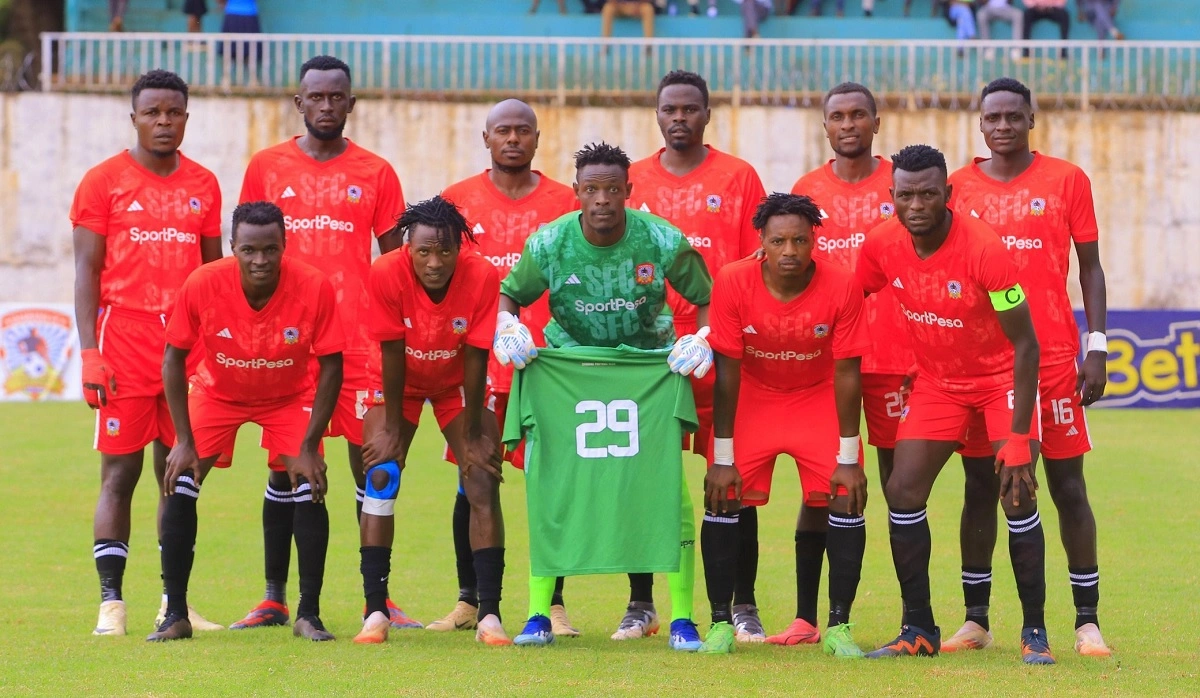
Shabana FC will sit at the summit of the 2025/2026 Football Kenya Federation Premier League (FKFPL) table heading to the October FIFA international break after battling to a 1-1 draw with Tusker in a league match played at Kasarani Stadium on Sunday, October 5.
Harambee Stars forward Austin Odongo gave Shabana the lead in the 19th minute before substitute Ian Simiyu levelled for Tusker with 10 minutes left on the clock.
The draw keeps Shabana level on points with Posta Rangers, as both teams have seven, but Shabana remain top on goal difference, having scored six goals and conceded three compared to Rangers who have let in four times.
The Glamour Boys have had a stellar start to the 2025/26 campaign after thrashing newbies APS Bomet 4-2 in the league opener before seeing off Bandari 1-0 on matchday two.
Everything seem to go perfect for Tore Bobe in their pursuit for their maiden league title. The only set-back being an injury to their main man Brain Michira who the coach said his early exit to the game against Tusker ‘disrupted the gameplan’.
“The medical team had deemed him 100 per cent fit, so when he got injured, it was a big blow because the team is built around him. We had to change the game plan,” said coach Okidi.
Michira was Shabana’s top scorer last season with 14 goals and has bagged two this season.
Shabana had a great second half of the last season picking eight wins and five draws in the last 17 games and they seem to have brought last season’s momentum into this season.
Never rule out Gor Mahia
After two wins and a loss from three matches, record champions Gor Mahia now sit third on the table on six points level with Posta.
K’Ogalo rarely kicks off a new season with good results but seem to pick form as the league grows but this season things seem to be different. Despite kicking off the season on a back foot with a 1-0 loss to Bidco on the opening fixture, Gor bounced back with wins against Sofapaka (2-0) and KCB (1-0).
Despite two consecutive wins, coach Charles Akonnor is still ‘unimpressed’ with the number of chances his charges are missing saying ‘such fine margins can be costly on some occasions’.
“Today was better, we played a little bit quicker, we controlled the game, created chances but we could not score and it is still the area we need to improve,” said the Ghanaian who took charge at the beginning of the season.
“It is good that he -Felix Oluoch- scored. In the last match that we played, he was short of gas, a little bit tired. Do not forget he was not with us in pre-season so he struggled a little bit but we were very happy that he scored.”
Police and Tusker seem less fiery
The defending champions, Kenya Police FC have had a mixed start to the season with one win- against APS Bomet over the weekend, and a draw against rivals Ulinzi Stars. Their title defence will be hampered by fixture congestion as they will also be representing Kenya in the CAF Champions League.
Police FC will host Sudanese powerhouse, Al Hilal Omdurman on 17 October, at Nyayo National Stadium for their much-anticipated CAF Champions League Cup second preliminary round.
The Law-enforcers advanced to this stage after surviving a late scare from Mogadishu City Club of Somalia, edging them out on away goals following a tense two-legged affair.
The reigning FKF-PL champions had registered an emphatic 3-1 victory in the first leg played in Nyayo National Stadium, where Eric Zakayo, Edward Omondi and David Simiyu scored, but were forced to sweat in the return leg staged still at Nyayo, falling 2-0 away before eventually progressing on aggregate.
Al Hilal Omdurman on the other hand, equally endured a competitive first-round tie, overcoming Jamus FC of South Sudan with a 2-1 aggregate score line.
The Sudanese powerhouse, a seasoned continental campaigner, will be looking to extend their impressive CAF pedigree, having consistently featured in both the Champions League and Confederation Cup in recent years.
The clash marks the first-ever meeting between the two sides, with the winner of the two-legged tie securing a coveted slot in the group stages of Africa’s top-tier inter-club competition, where the Etienne Ndayiragije coached-side will be aiming to make history as the first Kenyan side to grace the group stages.
Tusker FC on the other hand are having their worst start to the season after two draws and two losses from their opening four rounds. Losses against KCB and Posta Rangers, and draws against Mathare and Shabana have left the Brewers sitting 16th on the table with two points and a negative three goal difference.
But despite the poor start head coach Charles Okere has refused to press the panic button. According to Okere, who has been under pressure following the poor start, Tusker fans should remain patient as he tries to revive the sinking ship.
“We went into the game wanting three points, but getting a point is also a good result considering we are in the early stages of the season, and for the fans we ask for patience, everything will be alright, we are going through a bad spell but it won’t take long,” said Okere.
“We have started to get the playing formula right, and I want to assure the fans the moment everything clicks, we will go far, we are in the race, and we will fight until the end.”
Things not going so well for veterans and the newbies
Joining Tusker in the conversations of poor starts are Murang’a Seal, AFC Leopards and Sofapaka. Murang’a are 14th in the table after one win from three just ahead of Leopards who have accumulated just two points from two draws. Sofapaka are 17 after one draw and two losses from their opening three matches.
On the other hand, newly promoted APS Bomet sit bottom of the table with zero points after three consecutive defeats and a negative five goal difference.
The Kenya Sports Federation for the Deaf (KSFD)has officially named a formidable squad of 63 athletes who will represent the nation at the 25th Summer Deaflympics, scheduled to take place in Tokyo, Japan, from 15-26 November 2025.
The final team was unveiled following two days of intense national trials held at the Ulinzi Sports Complex in Nairobi. The trials brought together athletes from across the country, all competing for a chance to don the national colours on the grand international stage.
Kenya will head to Tokyo with high expectations, aiming to build on the country’s impressive performance at the 24th Summer Deaflympics in Caxias do Sul, Brazil, in 2022. At that edition, Team Kenya emerged as Africa’s top nation, finishing with 24 medals, 5 gold, 7 silver, and 12 bronze.
Spotlight on Serah Wangari Kimani
Among the standout athletes selected is Serah Wangari Kimani, the 2022 Deaflympics silver medalist, who once again proved her class at the trials. Wangari powered to victory in the women’s 10,000m final, clocking 41:04.5, a result that secured her ticket to Tokyo in emphatic fashion.
She was followed by Nancy Kendagor Jebichii, a double bronze medalist in Brazil, who crossed the line in 42:48.8, while Juster Kwamesa completed the podium in 44:33.6.
Speaking after her triumph, the 36-year-old mother of two expressed joy at returning to the global stage:
Kenya deaflympics participants in action.Image/@DeafFootball_Ke/X
“I’m grateful for this victory and happy to qualify for my second Deaflympics after my exciting exploits in Brazil three years ago. I trained for six months for this race because I didn’t want to miss the slot. Hard work has finally paid off,” she said.
Wangari, who also secured second place in the women’s 5000m category at the trials, is determined to improve on her previous performance:
“In Brazil, I was fourth in the 5000m. This time, I’m aiming to get into the medal bracket. As for the 10,000m, my focus is to turn the silver medal into gold in Tokyo. I’m training harder and praying everything goes well,” she emphasised.
Training without a coach?
Remarkably, Wangari prepared for the national trials largely on her own. Without a personal coach, she relied on self-discipline and creativity to fine-tune her skills.
“Sometimes I go online to learn new techniques, and sometimes I train with my friends who give me advice on where to improve. I mostly focused on speed and endurance, and thankfully, I didn’t pick up any injuries. I hope this smooth run continues all the way to Tokyo,” she revealed.
Reflecting on her Deaflympics debut in Brazil, Wangari described it as an invaluable learning experience:
“Back then, I was completely blank about what to expect. Even though I returned with silver, it opened my eyes. Now I know what to do, and my dream is to finally bring home gold.”
The 2025 Deaflympics in Tokyo carries added significance as it will mark the 100th anniversary of the Games since their inception in 1924. Kenya’s athletes, buoyed by past successes, will not only be chasing medals but also aim to cement the country’s place on the global Deaflympics map.
With the countdown to Tokyo now officially underway, all eyes will be on Team Kenya as they prepare to make history at the 25th Summer Deaflympics.
When the world’s best athletes step onto the track at Tokyo’s National Stadium for the 20th World Athletics Championships, they will be running for more than just medals and national pride.
With over KSh1.1 billion in total prize money on offer, Tokyo25 is set to become one of the most lucrative championships in athletics history. Each gold medal winner will receive KSh9.3 million, but that’s only part of the potential windfall.
A world record bonus of KSh13.3 million means that champions who set new records could walk away with KSh 22.5 million, an unprecedented payout in global athletics. The prize money breakdown includes KSh 9.3 million for individual gold, KSh 4.7 million for silver, and KSh 2.9 million for bronze.
Finalists placing between fourth and eighth will earn between KSh 665,000 and KSh 1.3 million, while relay gold teams will share KSh 10.6 million. The standout bonus of KSh13.3 million for a world record comes on top of any medal prize.
The payout structure not only matches Budapest 2023 at the top level but also exceeds it with the record-breaking incentive. For comparison, winners in Doha 2019 earned about KSh 8 million, underscoring the steady rise in athlete compensation.
With over 50 athletes heading to Tokyo, Team Kenya is well-positioned to claim a significant share of the prize pot. For elite performers like Faith Kipyegon, Beatrice Chebet, Emmanuel Wanyonyi, and Eliud Kipchoge, the stakes couldn’t be higher. Kipyegon, a multiple-time world and Olympic champion, will compete in both the 1500m and 5000m.
If she secures double gold and breaks a world record, she could earn over KSh 22 million, placing her among Kenya’s top-earning sports personalities. For rising talents like Wanyonyi, a breakthrough performance could deliver not just global fame, but long-term financial security. “One world record here is like winning the lottery, but it’s not luck, it’s sacrifice,” said Team Kenya coach Barnaba Korir.
In a show of support, the Kenyan government has significantly increased its rewards for medalists. Gold medal winners will receive KSh 3 million, silver medalists KSh 2 million, and bronze medalists KSh 1 million.
President William Ruto flagging off the Tokyo 2025 Championship team in State House.Image/@athletics_kenya/X
These new figures mark a major increase from previous championships, where gold attracted just KSh 750,000. Additionally, daily allowances for athletes representing Kenya abroad have been tripled, from about KSh 8,00 to about KSh 26,000 per day. The Kenyan contingent travelled in two batches.
The first group departed Nairobi on 10 September 2025, including Nelly Chepchirchir, Faith Cherotich, Reynold Cheruiyot, and Phanuel Kosgei. The second group left on September 11, consisting of middle- and long-distance athletes such as Emmanuel Wanyonyi. These athletes are set to compete in the 800m, 1500m, 5000m, and other key events where Kenya traditionally excels.
While athletes from wealthier nations may view prize money as a bonus, for many Kenyans, these rewards can transform lives. A single world-record win could fund schools, support extended families, or build infrastructure in remote villages. A single payday in Tokyo could change the lives of dozens back home, especially in the Rift Valley, the heartland of Kenyan athletics.
The Tokyo25 World Athletics Championships will take place from September 13 to 21, 2025, at the Tokyo National Stadium, which was rebuilt for the 2020 Olympic Games. The event will feature 49 competitions across track, field, and road races, with over 2,200 athletes from nearly 200 countries participating.
It also marks the return of the championships to Asia for the first time since Beijing 2015, bringing global attention to one of sport’s biggest stages.
“This is the stage where legends are made and rewarded,” said World Athletics president Sebastian Coe. With titles, glory, and millions at stake, Kenyan athletes will not only be chasing medals, they will be racing for legacies and life-changing fortunes.
As the dust settles on the just-concluded CHAN tournament, where Morocco lifted the trophy in one of Africa’s most fiercely contested competitions, a haunting question lingers: When will women’s football ever command such a spotlight?
This year’s edition made history, bringing together 19 national teams in the group stages, the largest number of participants in CHAN history.
Hosted across Kenya, Tanzania, and Uganda, the 8th edition was not just a tournament; it was a continental celebration of football at its finest.
The fully packed stadiums, electrifying atmosphere, adrenaline-filled stands, wall-to-wall media coverage, and branding frenzy painted a vivid picture of what football means to Africa when it is given the investment it deserves.
Even FIFA President Gianni Infantino’s presence underscored the weight and value placed on men’s football. But behind this glittering spectacle lies a sobering truth: women’s football in Africa continues to be treated as an afterthought. While men bask in glory, women remain sidelined, their talent dimmed by a lack of investment, attention, and respect.
Harambee Stars vs. the Starlets
The exposure that Kenya’s Harambee Stars gained from CHAN, even after bowing out in the quarterfinals, was immense.
For the players, the experience came with rewards, recognition, and renewed motivation to push the legacy of their country forward.
But where does this leave the Harambee Starlets? Unlike their male counterparts, Kenya’s women’s team rarely enjoys such visibility.
Women’s matches, whether in international tournaments or the local Kenya Women’s Premier League, attract sparse attendance, receive minimal media coverage, and almost no branding.
The result is a vicious cycle: the less women’s football is seen, the less it is valued, and the slower it grows. In the end, talent is suffocated, dreams are dimmed, and women’s football remains quietly overshadowed by the men’s game.
History forgotten too soon
Women’s football in Kenya is not a story of failure. In fact, it has delivered some of the country’s biggest sporting milestones in recent history.
Currently, we have a women’s team playing in the Oslo Homeless World Cup, where the Kenyan side has stormed into the semi-final after thrashing Wales 8-1.
Kenyan Harambee Starlets team representing Kenya in the Oslo Homeless World Cup.
In their group stage matches, Kenya registered remarkable results, outshining their opponents and surpassing the performance of any other Kenyan team, male or female, in similar global events.
And who can forget 2024, when the U-17 Junior Starlets etched their names in history by becoming the first Kenyan football team, male or female, to qualify for a FIFA World Cup?
They carried the nation’s flag to the FIFA U-17 Women’s World Cup and, on October 18, played their first-ever match against England.
These are moments of pride, breakthroughs that should have transformed the trajectory of women’s football in Kenya. The women’s teams have already proven their capability on the global stage. Yet, even with such milestones, the reality remains bleak as women’s football continues to be grossly underfunded.
The Starlets’ achievement was celebrated in headlines for a brief moment, but the investment, sponsorship, and structural support needed to sustain such success have yet to follow.
The question then is not whether women can perform at the highest level they already have, but whether the nation and the continent are willing to back them with the resources they deserve.
Voices from the game
According to football commentator Luqman Mahmoud, gender inequality in sports remains one of the biggest setbacks for Kenyan women athletes, stunting their growth and potential.
“The Federation should treat women’s football as equal to men’s. To date, Harambee Starlets are still demanding their May bonuses from WAFCON qualifiers, while their male counterparts, Harambee Stars, received their allowances even before playing in the CHAN tournament,” he says.
Luqman also emphasises the need for aggressive promotion of women’s football:
“The Federation should invest in popularising the women’s game. This will allow players to showcase their talent and attract a global audience. If the private sector collaborates with the Federation to heavily invest and promote women’s sports, more corporations will follow suit and support women’s football,” he adds.
Beryl Oyoo, a sports journalist, echoes these sentiments, pointing to the lack of infrastructure and resources as a key factor depopularizing the women’s game:
“We have talented girls at the grassroots level, but they lack proper fields, training gear, and the right exposure to help them shine on global stages. High school games are filled with extremely gifted young girls whose dreams are shattered because of the lack of support and better facilities for women’s football,” Oyoo explains.
“If fans can turn out in their thousands to support the Harambee Starlets during upcoming CECAFA games, it will help attract TV coverage and keep the women motivated to push the legacy started by the U-17 Starlets.”
The voices from the stands and the pitch make it clear: fans are ready to embrace women’s football, if only it is given the same platform and support as men’s tournaments.
CHAN has shown us what is possible when resources, planning, and passion converge. Now, imagine that same energy fueling women’s leagues, grassroots development programs, and continental championships.
We have countless girls waiting on dusty pitches, barefoot but with dreams bigger than their circumstances. They do not need sympathy. They need systems that believe in them and structures that support them.
We have witnessed how CHAN has positively influenced men’s football. Now, women need the same investment, the same passion, and the same belief. Because when women win, the game wins, and so does the nation.
Story First Published by: IVAN LUCY [storyspotlight.co.ke].
Preparations are in top gear for the FKF Kakamega Branch Mini League, scheduled to take place in mid-September. The competition will feature the top clubs from each of the county’s seven zones, alongside one runner-up team, bringing the total number of participants to eight.
The teams that have qualified are:
1. Warriors FC (Zone A)
2. Red Eagles (Zone B)
3. Tumaini FC (Zone C)
4. Tsunami FC (Zone D)
5. Manwar FC (Zone E)
6. Eshikufu FC (Zone E)
7. Matungu Blackstars FC (Zone G)
8. Chepsai (Zone B²) or Bushiangala T.T.I FC (Zone E²)
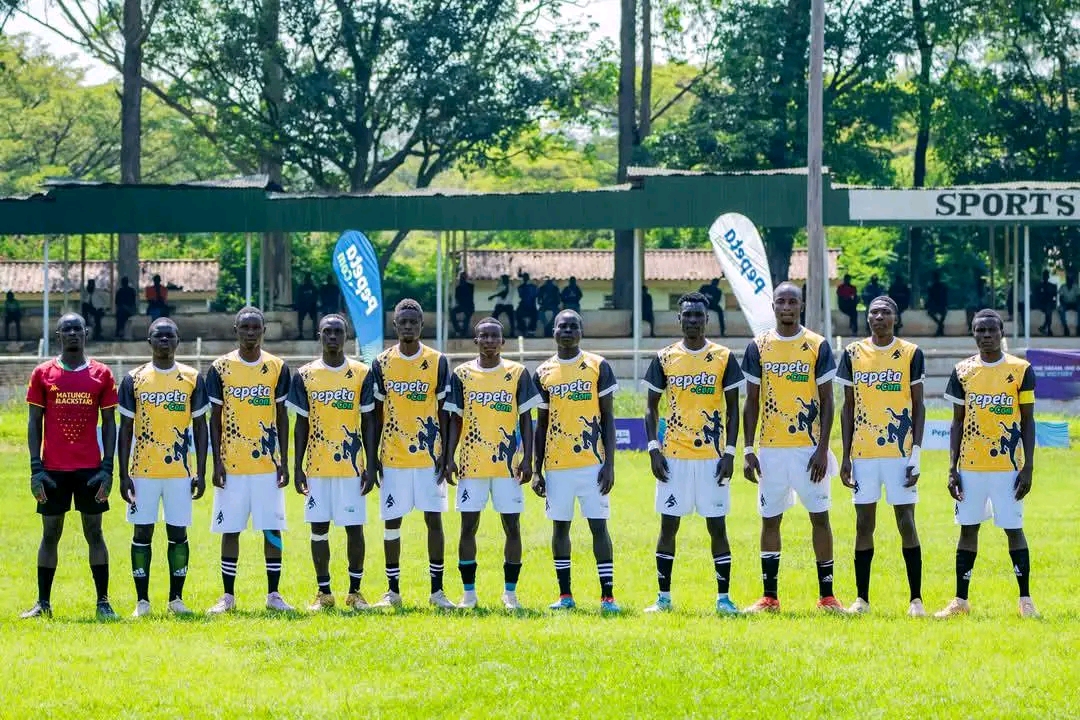
One of the headline contenders will be Matungu Blackstars FC, who were crowned champions of the Pepeta.com Kakamega County Edition Super Cup last weekend. The Zone G winners are now aiming to replicate that success in the Mini League, where they will face stiff competition from other zonal champions.
Matungu Blackstars FC winners of the just-concluded Pepeta Super Cup Kakamega County edition.
Tournament organisers have announced lucrative prizes for the teams. The champions will walk away with a trophy, a football, and Ksh. 150,000. The runners-up will receive a trophy, a football, and Ksh. 100,000, while the third-placed team will claim a trophy, a football, and KSh. 50,000. All other participating teams will be awarded a football and KSh. 30,000. In addition, all zonal runners-up will pocket Ksh. 20,000.
The FKF Kakamega Mini League is expected to provide a platform for showcasing local talent while raising the competitive standards of grassroots football in the county. With teams already in high spirits and supporters eagerly awaiting kick-off, the tournament is shaping up to be one of the most exciting events on the county football calendar.
The Mumias Sports Complex was set alight on Saturday, as Matungu Blackstars FC clinched the 2025 Pepeta na Jamii Super Tournament, Kakamega County edition, with a decisive 2-0 victory over Green Villa FC.
[Photo] Fans enjoying a match at Mumias Sports Complex
The hotly contested final drew fans from across the county, with the Blackstars showcasing class and determination to silence their rivals and lift the prestigious grassroots trophy.
Celebrations erupted at the stadium as Pepeta.com Chief Executive Officer Joseph Mbugua awarded the champions a glittering trophy alongside a cash prize of Ksh 150,000. Green Villa FC, the gallant runners-up, walked away with Ksh 100,000.
“As Pepeta, we are committed to funding more of such tournaments to nurture grassroots talent,” said Mbugua. “But we cannot do it alone — we call upon other stakeholders to help grow sports and unlock the potential of our young players,” he added.
His call was echoed by Football Kenya Federation (FKF) Kakamega branch chairperson Peter Muterwa, who underscored the need for better sporting infrastructure.
“We need more stadia across the country to boost football training,” Muterwa stated. “On behalf of FKF Kakamega, I thank Pepeta for this noble initiative. I also challenge clubs to intensify their training even as the federation works on bringing in more sponsors and partners.” he concluded.
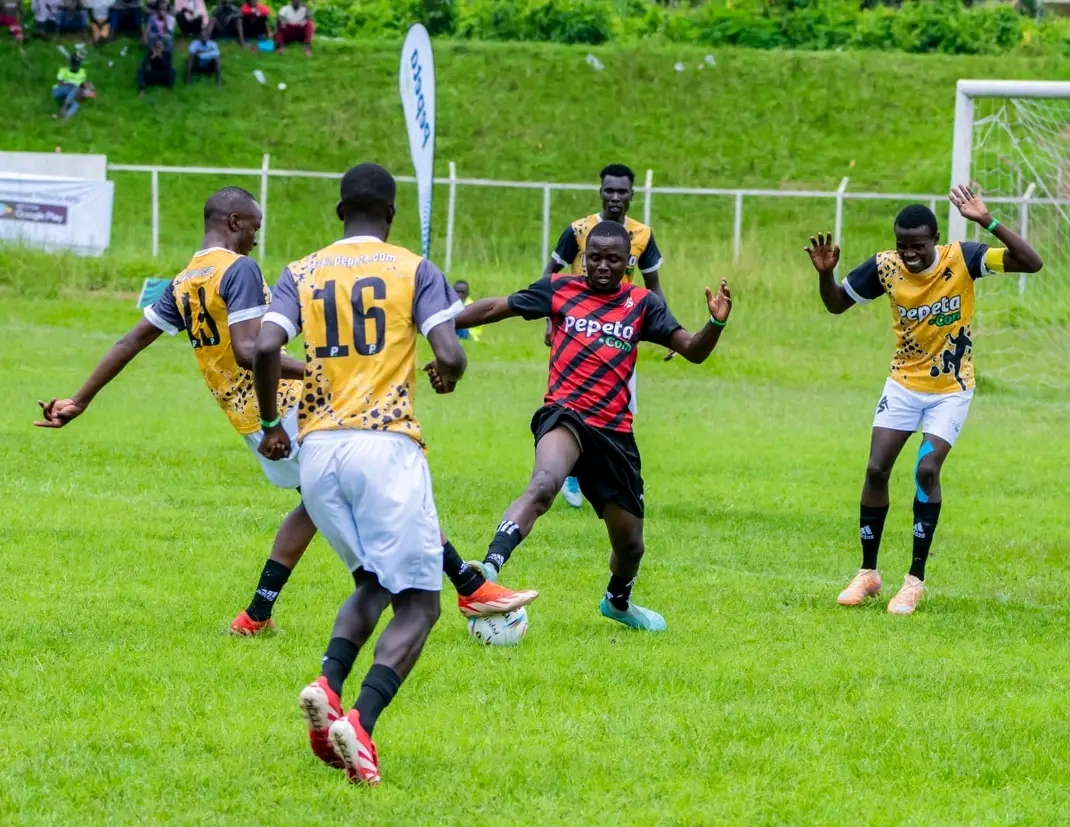
Matungu Blackstars FC players (in yellow Jersey) in action during a past match
The Pepeta na Jamii Super Tournament 2025 brought together 32 football clubs from across Kakamega County. After two 2 days of intensive competition, Matungu Blackstars FC from Matungu Constituency emerged victorious, while Green Villa FC from Mumias West Constituency secured second place.
With today’s thrilling finale, attention now shifts to how Pepeta.com and partners will build on this momentum to strengthen grassroots football in Kakamega and beyond.
The Parliamentary Service Commission (PSC) celebrated a significant milestone on 18 July 2025, with a vibrant and well-attended Sports Day held at the KCB Leadership Centre in Karen, Nairobi.
Spearheaded by the PSC Wellness Committee, the event brought staff together for a day filled with energy, healthy competition, and camaraderie. With the theme “Igniting Team Spirit, Fueling Fitness, and Powering Productivity,” the day aimed to encourage physical activity, strengthen interdepartmental relationships, and uplift workplace morale.
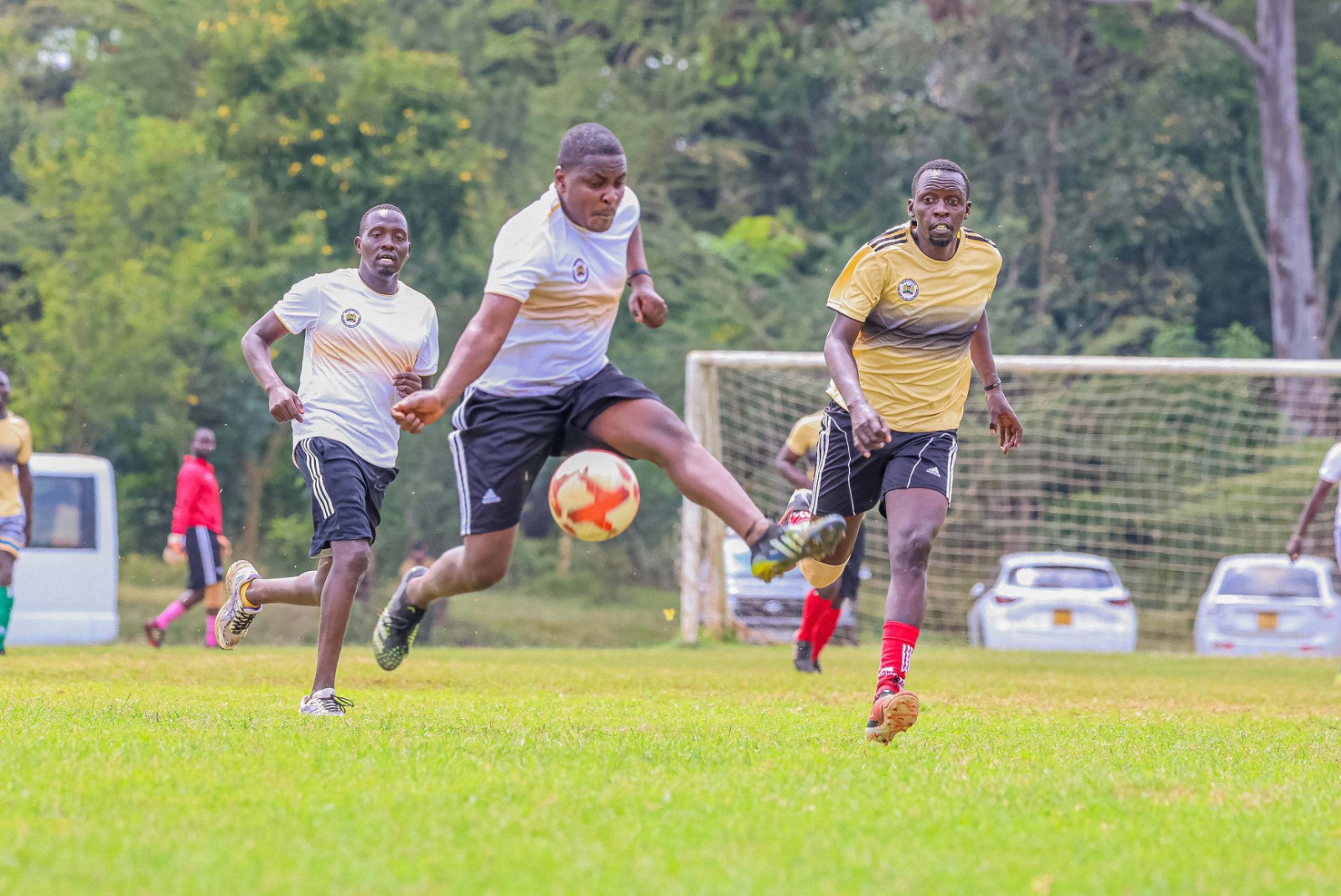
The program featured a variety of sports and recreational events, including football, volleyball, basketball, swimming, table tennis, and the much-loved tug of war. Friendly matches between teams from different departments were marked by laughter, cheers, and impressive displays of athleticism and teamwork.
Clerk of the Senate and Secretary to the PSC, Jeremiah Nyegenye, praised the event’s organising team, led by Osborn Obayo, for their dedication. He emphasised the importance of wellness and recreational activities in improving staff productivity and creating a cohesive workplace environment.
“Events like this are crucial in promoting both physical health and institutional unity. They help foster a culture of teamwork, resilience, and mutual respect,” Nyegenye said.
Several dignitaries also participated in the day’s activities, including Senator Joyce Korir, Hon. Mishi Mboko, Senator Wahome Wamatinga, Deputy Clerk Eunice Gachangi, and Senate Deputy Clerk Mohamed Ali.
The leaders not only delivered inspiring remarks but also joined in the sporting fun, further boosting morale and engagement among staff.
The day concluded with an awards dinner where standout teams and individuals were recognised for their performance, discipline, and sportsmanship. Special commendations were also given to those who exemplified teamwork and fair play.
The PSC Sports Day reaffirmed the Commission’s commitment to staff wellbeing and institutional cohesion, illustrating that a fit, engaged workforce is key to sustaining high performance in public service.